 English
 Spanish
 French
 German
 Italian
 Chinese (Simplified)
 Japanese
 Korean
 Arabic
 Portuguese
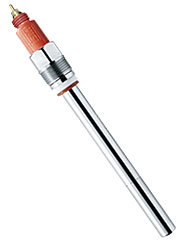
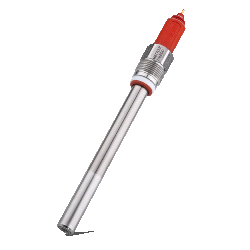
2-Electrode and 4-Electrode Conductivity Sensors
Product Details:
- Port Size 1/2 NPT or customized as per request
- Response Time 10 seconds to 90% full scale
- Application Water quality analysis, industrial water, beverages, laboratory monitoring, chemical process
- Automation Grade Semi-automatic or Automatic (system dependent)
- Frequency 50/60Hz (transmitter dependent)
- Hardness Suitable for use in hard/soft water
- Humidity 095% RH, non-condensing
- Click to View more
X
2-Electrode and 4-Electrode Conductivity Sensors Product Specifications
- Semi-automatic or Automatic (system dependent)
- 50/60Hz (transmitter dependent)
- Suitable for use in hard/soft water
- 095% RH, non-condensing
- 1/2 NPT or customized as per request
- 10 seconds to 90% full scale
- Water quality analysis, industrial water, beverages, laboratory monitoring, chemical process
- Manual or Automatic (depending on instrument)
- 150g (sensor); 350g (cable & electronics)
- 0.01 S/cm (2-electrode, low range); 0.1 S/cm (4-electrode)
- 1% of reading (standard)
- Threaded, inline or submersible
- Industrial, Laboratory, Environmental monitoring
- Automatic temperature compensation, corrosion-resistant body, high precision, replaceable cable
- 2-Electrode: 02000 S/cm (standard); 4-Electrode: 1 S/cm to 2000 mS/cm
- 070C (standard); Up to 130C (with high-temperature models)
- Electrode Length: 60150mm; Diameter: 1025mm
- LED, LCD (device dependent)
- 2-Electrode or 4-Electrode Conductivity Sensor
- Analog (420mA), RS485 Modbus (optional)
- 936V DC (dependent on transmitter)
- 150mm (sensor only)
- 1224V DC (external transmitter or analyzer dependent)
- 1 (single sensor per channel)
2-Electrode and 4-Electrode Conductivity Sensors Trade Information
- South America, Eastern Europe, Middle East, Asia, Western Europe, Central America, North America, Australia, Africa
- All India
Product Description
2-Electrode and 4-Electrode Conductivity Sensors
- Versatile probes for accurate chemical concentration control
- 2-electrode sensors specially for low conductivity and 4-electrode sensors for medium to high conductivity.
- Wide range of applications
- from biopharmaceutical to chemical processes
- Highest accuracy at very low to medium conductivities
- Compliance through certification package
Product details
| Material | Stainless Steel 1.4435 (316L) |
| Brand | METTLER TOLEDO |
| Usage/Application | Laboratory Use |
| Color | Multi |
| Sensor element | Platinum and ceramic |
| Process temperature | -5 to 120C (140C/ 1h) 20 to 250 F ( 284F/1h) |
Reliable Sensing for Diverse Water Quality Needs
Designed for challenging industrial and laboratory environments, these conductivity sensors utilize high-grade electrode materials and corrosion-free wetted parts, including PVC, CPVC, PEEK, and SS316. Their robust construction, combined with high precision and resolution, ensures accurate measurements from pure water to highly conductive process fluids. The IP67 ingress protection enables durable, consistent performance in demanding conditions.
Flexible Installation and Advanced Measurement Capabilities
With multiple mounting options such as threaded, inline, or submersible, these sensors accommodate a wide range of setups. Standard 3m cable (extendable to 10m), compatibility with analog (420mA) and RS485 Modbus outputs, and both manual and automatic operation modes ensure seamless integration into existing systems. Integrated temperature compensation and fast response times enhance measurement reliability in diverse applications.
FAQs of 2-Electrode and 4-Electrode Conductivity Sensors:
Q: How do I select between a 2-electrode and a 4-electrode conductivity sensor for my application?
A: Choose a 2-electrode sensor (K=0.1 or 1.0) for low to medium conductivity (02000 S/cm), such as laboratory or drinking water testing. Opt for a 4-electrode variant (K=0.0510.0) for processes with higher conductivity, harsh samples, or where fouling is a concern, as it offers a wider measurement range (1 S/cm to 2000 mS/cm) and improved stability.Q: What materials are used for electrodes and wetted parts in these sensors, and why?
A: The 2-electrode models use 316 stainless steel, ideal for durability and corrosion resistance. The 4-electrode designs use platinum or graphite for broader chemical compatibility and measurement precision. Wetted parts are crafted from PVC, CPVC, PEEK, or SS316, ensuring chemical resistance for applications in water, beverages, and industrial liquids.Q: When should manual or automatic zero calibration be performed?
A: Zero calibration may be required during initial setup, after prolonged use, or when significant measurement drift is observed. Depending on the connected transmitter or analyzer, calibration can be manual or automatic. Refer to your devices instructions to determine the exact calibration procedure and interval for optimal accuracy.Q: Where can these conductivity sensors be installed, and what mounting options are available?
A: Sensors can be mounted using threaded (1/2 NPT), inline, or submersible methods, providing installation flexibility. They support various applications, from water treatment facilities and industrial process lines to laboratory environments, thanks to their adaptable mounting and robust IP67-rated housings.Q: What is the typical process for cleaning and maintaining these sensors?
A: Routine maintenance includes manual or automatic cleaning of the electrodes. For systems equipped with Clean-In-Place (CIP), the sensors can be cleaned without removal, minimizing downtime. Inspect wetted surfaces periodically and follow your manufacturers cleaning schedule for reliable, long-term performance.Q: How does the built-in temperature sensor benefit conductivity measurements?
A: The integrated NTC/PT1000 temperature sensor enables automatic temperature compensation, ensuring conductivity readings remain accurate despite temperature fluctuations between 080C. This feature is particularly beneficial for processes sensitive to temperature variations, including industrial or laboratory applications.Q: What are the primary usage areas and benefits of these conductivity sensors?
A: These sensors are ideal for water quality analysis, industrial water treatment, beverage production, laboratory monitoring, and chemical processes. Their high accuracy (1%), rapid response, and chemical-resistant construction provide reliable, long-lasting performance in both routine monitoring and demanding process environments.Tell us about your requirement

Price:
Quantity
Select Unit
- 50
- 100
- 200
- 250
- 500
- 1000+
Additional detail
Mobile number
Email

Other Products in 'Process Analytics' category

Contact Details
Mettler-Toledo India Private Limited
GST : 27AABCM0779N1Z0
GST : 27AABCM0779N1Z0

- Amar Hill, Saki Vihar Road, Powai,Mumbai - 400072, Maharashtra, India
- Phone : 08045816537
- Ms Ekta Zemse (Executive Marketing)
- Mobile : 08045816537
-
 Send Inquiry
 Send Inquiry
|


 |
Mettler-Toledo India Private Limited
All Rights Reserved.(Terms of Use) Developed and Managed by Infocom Network Private Limited. |
