 English
 Spanish
 French
 German
 Italian
 Chinese (Simplified)
 Japanese
 Korean
 Arabic
 Portuguese
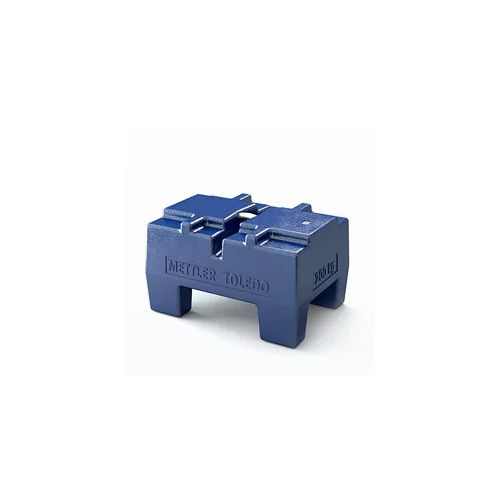
Heavy-duty Weights
Product Details:
- Application Calibration of Industrial Weighing Scales
- Usage Industrial Calibration
- Features Corrosion Resistant, Durable Finish, Heavy-duty Construction
- Size Standardized weights; assorted sizes based on capacity
- Function Calibration and Testing of Weighing Scales
- Automatic Grade Manual
- Product Type Heavy-duty Weights
- Click to View more
Heavy-duty Weights Product Specifications
- Industrial Platform Scale
- Manual
- Corrosion Resistant, Durable Finish, Heavy-duty Construction
- Black
- Standardized weights; assorted sizes based on capacity
- Up to 1000 kg (varies by model)
- Industrial Calibration
- Calibration and Testing of Weighing Scales
- High Precision Tolerance, typically 0.05% of weight
- Heavy-duty Weights
- 10 kg to 1000 kg
- Cast Iron
- Calibration of Industrial Weighing Scales
- -10C to +50C
- Integrated handle or slots for easy lifting
- Conforms to OIML and NABL standards (where applicable)
- 7.2 7.6 g/cm (typical for Cast Iron)
- Rectangular or cylindrical, depending on capacity
- Wooden box or carton, as required
- Available as per user requirement
- Painted with industrial-grade paint for rust resistance
Heavy-duty Weights Trade Information
- Australia, Central America, Asia, North America, South America, Eastern Europe, Western Europe, Middle East, Africa
- All India
Product Description
Heavy-duty Weights
Premium-quality weights to satisfy stringent testing requirements
Heightened requirements on scale testing require reliable weights that survive years of use in rough environments. With a strong engineering focus on safe and productive testing, cast iron weights from kilograms to 5 tons are perfect for this application.
Safe Lifting and Stacking
Handling heavy capacity weights to test scales always poses certain risks. To avoid manual handling operations, METTLER TOLEDO has designed weights that offer a myriad of lifting options, including 360 deg access by fork lifts, cranes, and hoists.
Flexibility in Scale Testing
Grip handle calibration weights are available in nominal values of 1 kg up to 50 kg, satisfying maximum permissible errors of OIML classes F1 to M3. While material, surface conditions, density and magnetism meet the same requirements as traditional knob shape weights, these weights allow safe stacking.
Exceptional Durability and Accuracy
Designed for rigorous industrial environments, our cast iron weights guarantee both longevity and measurement precision. The robust construction, combined with a durable finish and corrosion resistance, ensures consistent performance even in demanding conditions. Their strict adherence to recognized calibration standards supports high-accuracy weighing scale testing.
Versatile Handling and Customization
Each weight comes with an integrated handle or slots, simplifying the lifting and placement process during calibration. Users can request customized sizes or capacities tailored to their unique requirements, ensuring the optimal fit for any industrial platform scale or calibration scenario.
FAQs of Heavy-duty Weights:
Q: How are these heavy-duty weights used for calibration?
A: These weights are placed on industrial platform scales to verify and adjust the accuracy of the scales. This process ensures that the scales remain precise for manufacturing, logistics, and other industrial applications.Q: What standards do these weights conform to?
A: They comply with relevant OIML and NABL standards where applicable, ensuring that each weight meets international requirements for metrology and calibration.Q: When should I perform calibration using these weights?
A: Calibration should be performed periodically, especially after equipment relocation, repair, or as part of a regular maintenance schedule to guarantee ongoing accuracy in industrial scale measurements.Q: Where can these weights be used?
A: They are suitable for use in factories, warehouses, laboratories, and service centersany setting that requires precise calibration or testing of industrial weighing scales.Q: What is the process for maintaining these weights?
A: To maintain accuracy, keep the weights clean, dry, and store them in the provided packaging to prevent corrosion or physical damage. Regular visual inspection is recommended to ensure their integrity.Q: How does customization work for these weights?
A: You can request custom capacities, shapes, or handle types based on your operational requirements. Our team will work with you to provide weights that fit your specific calibration needs.Q: What are the main benefits of using these cast iron calibration weights?
A: Key benefits include robust corrosion resistance, ergonomic handling, high-precision tolerance, compliance with metrology standards, and durability, making them ideal for long-term, reliable use in industrial environments.
Price:
- 50
- 100
- 200
- 250
- 500
- 1000+

Other Products in 'Industrial Scales and Load Cells' category

GST : 27AABCM0779N1Z0

- Amar Hill, Saki Vihar Road, Powai,Mumbai - 400072, Maharashtra, India
- Phone : 08045816537
- Ms Ekta Zemse (Executive Marketing)
- Mobile : 08045816537
-
 Send Inquiry
 Send Inquiry
|


 |
Mettler-Toledo India Private Limited
All Rights Reserved.(Terms of Use) Developed and Managed by Infocom Network Private Limited. |
