 English
 Spanish
 French
 German
 Italian
 Chinese (Simplified)
 Japanese
 Korean
 Arabic
 Portuguese
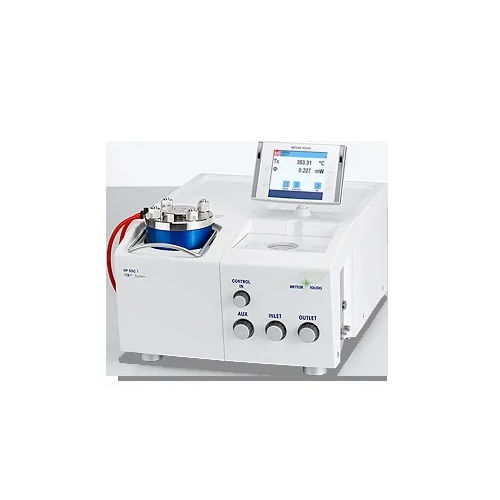
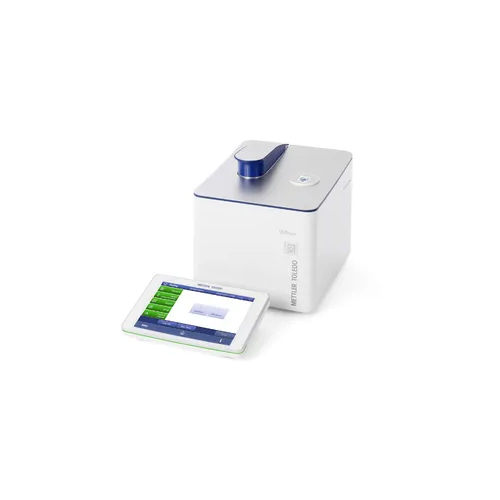
High-Pressure Differential Scanning Calorimetry
Product Details:
- Voltage 220 V
- Accuracy 0.1C temperature resolution
- Frequency 50/60 Hz
- Core Components Pressure chamber, heating/cooling system, sensors, controller
- Model No HP-DSC-5000
- Automation Grade Semi-automatic
- Power Source AC electric
- Click to View more
High-Pressure Differential Scanning Calorimetry Product Specifications
- 10 ml to 15 ml (sample cell volume)
- Corrosion resistant stainless steel and alloys
- Digital LCD Display
- Capable of operation at elevated pressures; high safety standards
- -170C to 600C
- Thermal events under various pressures
- Thermal analysis under high pressure; research and material characterization
- High-Pressure Differential Scanning Calorimeter
- AC electric
- 610 mm x 570 mm x 500 mm
- Approx. 50 kg
- Semi-automatic
- Pressure chamber, heating/cooling system, sensors, controller
- 50/60 Hz
- HP-DSC-5000
- 220 V
- 0.1C temperature resolution
- Automated electronic calibration
- Overpressure protection, emergency shut-off
- Inert, oxidizing, or reducing gas environments
- Proprietary thermal analysis software suite
- High precision thermocouples and pressure sensors
- Isothermic, scanning, dynamic, and stepwise
- Integrated closed-loop cooling
- 100 bar (10 MPa)
- Solids, powders, polymers, composites, liquids
- CE, ISO 9001 certified
- USB and RS232 data interface
- 0.01°C/min to 100°C/min adjustable
High-Pressure Differential Scanning Calorimetry Trade Information
- Western Europe, Central America, Eastern Europe, Middle East, South America, Asia, North America, Australia, Africa
- Manipur, Chandigarh, Dadra and Nagar Haveli, Himachal Pradesh, Andaman and Nicobar Islands, Uttarakhand, Daman and Diu, Lakshadweep, Haryana, , South India, West India, Nagaland, East India, Gujarat, Mizoram, Meghalaya, Bihar, Goa, Jharkhand, Punjab, Assam, Delhi, Arunachal Pradesh, Jammu and Kashmir, Madhya Pradesh, Maharashtra, Rajasthan, Sikkim, Tamil Nadu, Telangana, Tripura, Pondicherry, West Bengal, Uttar Pradesh, Karnataka, North India, Andhra Pradesh, Kerala, Central India, Odisha, All India, Chhattisgarh
Product Description
High Pressure Differential Scanning Calorimeter
Increased pressure influences all physical changes and chemical reactions in which a change in volume occurs. For material testing, process development or quality control there is often no alternative to DSC measurements under pressure.
Features:
- Shorter analysis time: higher pressure and temperature accelerate reactions
- Measurements under process conditions: simulation of practical reaction environments
- Better interpretation: effects can be separated by suppressing vaporization
- Suppresses and delays vaporization: separation of a reaction from overlapping vaporization
- Higher gas concentrations: reaction rate of heterogeneous reactions with gases is increased
- Measurements under special atmospheres: oxidative, oxygen-free conditions or measurements with toxic or combustible gases are possible
- Possibility of working at different pressures: more accurate measurement of adsorption and desorption behavior
Product details
|
Material |
Stainless steel |
|
Brand |
METTLER TOLEDO |
|
Application |
Laboratory |
|
Usage/Application |
Laboratory |
|
Type |
Digital |
|
Power |
Electric |
FAQ
1. High-Pressure Differential Scanning Calorimetry (HP-DSC) is a term?
Ans - In order to measure the heat flow of a sample as a function of temperature while under pressure, a thermal analysis method called HP-DSC is used. The physical and chemical characteristics of a sample, such as changes in phase transitions, oxidation, and other changes in the samples physical and chemical composition, can be studied using this technique.
2. Which samples can be examined using HP-DSC?
Ans - An extensive range of materials, including metals and alloys, polymers, medicines, and food, can be studied with HP-DSC.
3. What distinguishes HP-DSC from other thermal analysis methods?
Ans - Because pressure is applied, HP-DSC can provide measurements with a higher resolution and greater accuracy than conventional DSC. It is additionally better suited for researching materials in applications like high-pressure reactors or containers since it can measure samples under conditions that are more like their real use than other techniques can.
4. What distinguishes HP-DSC from other types of thermal analysis?
Ans - Differential Scanning Calorimetry (DSC) is available in the form of HP-DSC, which has a higher resolution and greater accuracy. Unlike DSC, which measures a samples heat flow as a function of time and temperature, it measures a samples heat flow as a function of temperature while it is under pressure.
5. What advantages come with adopting HP-DSC?
Tailored Atmospheric Control
The HP-DSC-5000 enables experiments under inert, oxidizing, or reducing atmospheres, making it exceptionally versatile for analyzing a broad spectrum of materials. Its robust pressure chamber and advanced sensor array allow researchers to simulate challenging environments, enhancing discovery and innovation in thermal analysis.
Reliable and Automated Calibration
With automated electronic calibration, the HP-DSC-5000 ensures precise measurements and simplifies routine maintenance. This feature alleviates manual intervention, allowing users to focus on results, confident in the accuracy and repeatability of their thermal studies.
Safety and Compliance at the Core
Built to meet CE and ISO 9001 certifications, this calorimeter is equipped with overpressure protection and an emergency shut-off system. Its corrosion-resistant materials and sturdy construction reinforce operational safety, making it suitable for continuous research or industrial use.
FAQs of High-Pressure Differential Scanning Calorimetry:
Q: How do I operate the HP-DSC-5000 under different atmospheric conditions?
A: The HP-DSC-5000 allows you to select inert, oxidizing, or reducing gases through its integrated atmospheric control system. Simply set your preferred environment on the digital LCD interface before initiating your experiment to ensure accurate, controlled thermal analysis.Q: What process does the automated electronic calibration follow, and when should I calibrate the instrument?
A: The calorimeter utilizes automated electronic calibration, which is managed through the proprietary thermal analysis software. Calibration typically occurs before a series of experiments or when accuracy must be verified, ensuring data precision without time-consuming manual adjustments.Q: Where can I use this high-pressure DSC system effectively?
A: This equipment is suitable for research laboratories, quality control centers, and industrial R&D facilities seeking to analyze materials under variable pressure and temperature conditions. Its compact design and high safety standards make it appropriate for various professional environments across India.Q: What are the primary benefits of using the HP-DSC-5000 for thermal analysis?
A: Key benefits include accurate detection of thermal events under high pressure, flexible temperature and atmosphere settings, fast and slow heating rates, and enhanced safety features. This makes it ideal for advanced research on solids, powders, polymers, composites, and liquids.Q: How is data output managed, and which interfaces are available for connectivity?
A: Data from the HP-DSC-5000 can be exported via USB and RS232 interfaces. This makes it easy to connect with computers or other analytical devices, facilitating seamless reporting and integration with your laboratorys data management systems.
Price:
- 50
- 100
- 200
- 250
- 500
- 1000+

Other Products in 'Analytical Instruments' category

GST : 27AABCM0779N1Z0

- Amar Hill, Saki Vihar Road, Powai,Mumbai - 400072, Maharashtra, India
- Phone : 08045816537
- Ms Ekta Zemse (Executive Marketing)
- Mobile : 08045816537
-
 Send Inquiry
 Send Inquiry
|


 |
Mettler-Toledo India Private Limited
All Rights Reserved.(Terms of Use) Developed and Managed by Infocom Network Private Limited. |
