
Product Description
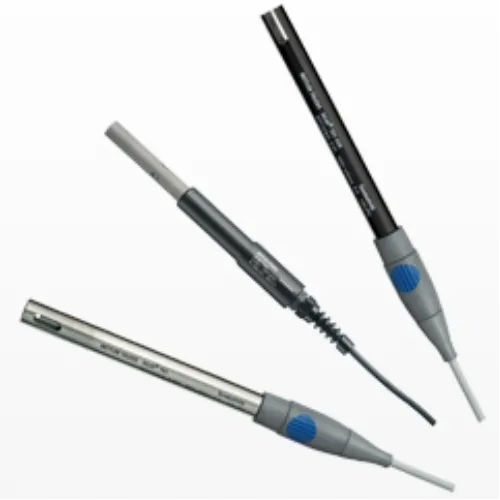
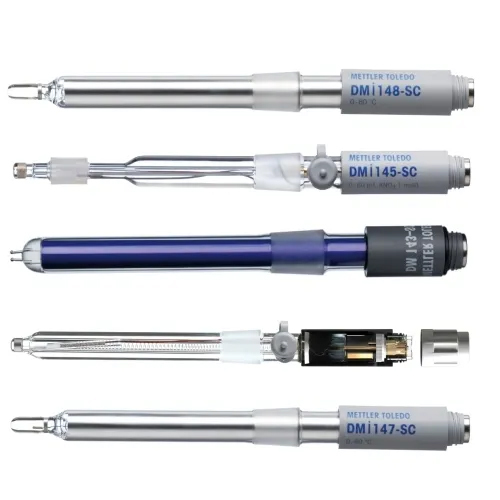
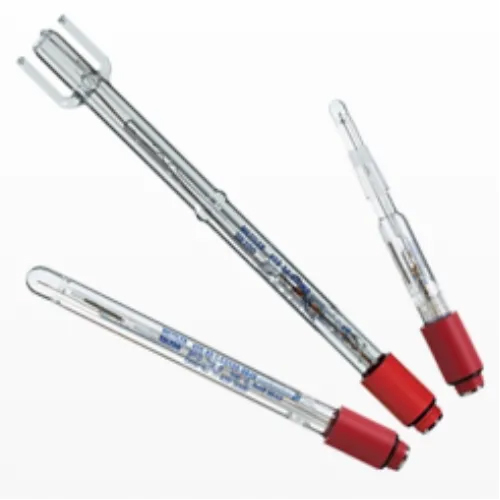
InLab Conductivity Probes
InLab conductivity probes are sensors that assess a solution's electrical conductivity. They are frequently used to measure the concentration of dissolved salts, acids, bases, and other ionic compounds in a solution in scientific research, water treatment, and industrial processes.
The electrodes of InLab conductivity probes are normally made of platinum or stainless steel and are constructed with a two- or four-electrode system. A glass or plastic shaft that shields the electrodes from the fluid being measured and enables simple insertion into the solution surrounds them. Since conductivity is temperature-dependent, the probes are also built with a temperature sensor that gauges the temperature of the solution being measured.
The idea behind measuring conductivity is that electrical conductivity rises with ion concentration in a solution. An alternating current is supplied to the electrodes of the probe while it is submerged in the solution, and the resulting electrical conductivity is then measured. The probe transforms the electrical conductivity measurement into a signal that can be read and processed by a conductivity metre or other device, such as a digital or analogue signal.
For a range of applications, InLab conductivity probes are offered in a number of forms and ranges. With features like automatic temperature adaptation and calibration, they are made to be precise, dependable, and simple to use. They are also made to be strong and corrosion-resistant, making them appropriate for usage in challenging situations and with a range of treatments.
For pure and ultra-pure water
- A high precision 2-pole conductivity cell with integrated temperature sensor for low conductivity measurement.
- Recommended for low conductivity measurements in the laboratry.
- Nominal cell constant: 0.105 /cm.
Versatile Designs for Every ApplicationChoose from a variety of InLab Conductivity Probes, each engineered to deliver reliable readings across water quality testing, laboratory research, and industrial analysis. With options for different cell constants, electrode types, and cable lengths, theres an InLab probe suited for every testing scenario.
Robust Construction and Easy MaintenanceManufactured using stainless steel and glass, these probes are built for durability and chemical resistance. Cleaning is straightforwardsimply rinse with distilled water or a mild detergentand storage is hassle-free in a clean, dry environment.
Exceptional Accuracy and ConnectivityEach probe is designed for high accuracy (0.5 % of reading), with automatic calibration options for select models. Connectivity fits your setup, thanks to BNC, S7, and other interfaces, making integration with Mettler Toledo instruments simple and effective.
FAQs of InLab Conductivity Probes:
Q: How do I properly clean and maintain InLab Conductivity Probes?
A: Rinse your InLab Conductivity Probe with distilled water or a mild detergent after each use. Avoid abrasive cleaners or solvents. Store the probe in a clean, dry environment to prevent contamination or damage when not in use.
Q: What types of samples and applications are these probes suitable for?
A: InLab Conductivity Probes are suitable for measuring the conductivity of various aqueous solutions in laboratory water quality testing, field sampling, and industrial process analysis. Their durable materials and wide measuring range make them adaptable for routine and demanding environments.
Q: When should I calibrate my InLab Conductivity Probe?
A: Calibration frequency depends on usage and application requirements, but it is generally recommended to calibrate before each series of measurements or whenever the probes accuracy is critical. Follow your instruments and probes user manual for specific calibration procedures.
Q: Where can these conductivity probes be used?
A: These probes are used in laboratories, industrial facilities, fieldwork locations, and anywhere reliable solution conductivity measurements are required. Their robust construction and IP67 rating on selected models allow for flexible deployment across various environments.
Q: What are the benefits of using a probe with an integrated temperature sensor?
A: Probes with integrated temperature sensors automatically compensate for temperature variations, providing more accurate and reliable conductivity measurements without the need for a separate temperature probe.
Q: How do I choose the correct cell constant (K value) for my sample?
A: Select the cell constant based on your expected conductivity range: K=0.1 cm for ultra-pure water, K=1.0 cm for general applications, and K=10 cm for high-conductivity samples. Choosing the right K value optimizes measurement sensitivity and accuracy.
Q: What is the typical measuring range and accuracy of these probes?
A: Depending on the model, InLab Conductivity Probes measure conductivities from approximately 0.01 S/cm up to 1,000 mS/cm, with a high accuracy of 0.5 % of the reading. This broad range ensures suitability for diverse sample types and precision requirements.