 English
 Spanish
 French
 German
 Italian
 Chinese (Simplified)
 Japanese
 Korean
 Arabic
 Portuguese
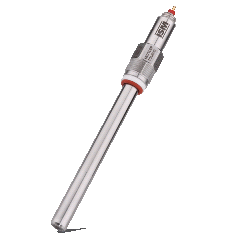
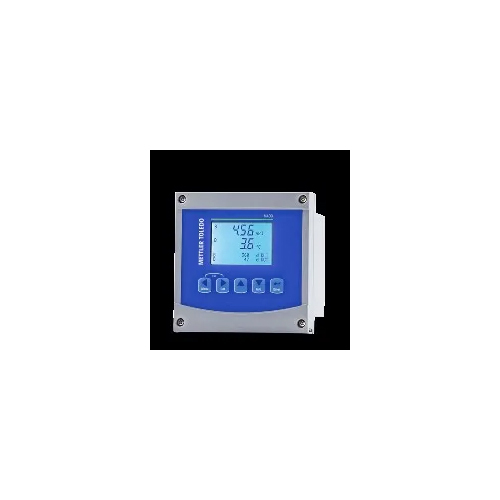
Online Dissolved Oxygen Analyser
Product Details:
- Features Automatic temperature compensation, real-time data logging, low maintenance, robust design
- Application Continuous monitoring of dissolved oxygen in water, effluent treatment, aquaculture, industrial processes
- Test Range 0-20 mg/L (ppm)
- Port Size 1/4 inch
- Display Type LCD digital display
- Frequency 50/60 Hz
- Gas Pressure Ambient
- Click to View more
Online Dissolved Oxygen Analyser Product Specifications
- 1% of reading or 0.01 mg/L
- 5C to 50C
- 2.5 kg
- 0 to 95% RH
- 0-20 mg/L (ppm)
- Online Dissolved Oxygen Analyser
- 0.01 mg/L
- 220V AC
- RS-485, 4-20mA output
- Online water quality analysis
- Panel / Field mounting
- Automatic
- Single channel
- Less than 30 seconds
- Ambient
- 220V AC, 50/60Hz
- 1/4 inch
- LCD digital display
- 50/60 Hz
- Microprocessor based digital control
- Continuous monitoring of dissolved oxygen in water, effluent treatment, aquaculture, industrial processes
- 0-20 mg/L (ppm)
- Automatic temperature compensation, real-time data logging, low maintenance, robust design
- Manual and automatic calibration supported
- Built-in memory for historical data
- IP65
- Flow-through cell
- Modbus communication protocol
- High & low DO level alarms
- ABS / Stainless steel
- 3 meters (customizable)
- Optical / membrane electrode
Online Dissolved Oxygen Analyser Trade Information
- Western Europe, Central America, North America, South America, Eastern Europe, Middle East, Asia, Australia, Africa
- All India
Product Description
In process gas stream or tank applications, amperometric oxygen gas sensors provide reliable, real-time measurements without the need for gas sampling or conditioning.
Easy in-situ installation directly in the tank or vessel
No cumbersome sampling system needed
Easy two-minute maintenance and calibration
Product details
| Power | Electric |
| Brand | METTLER TOLEDO |
| Application | Laboratory Use |
| Automation Grade | Semi-Automatic |
| Usage/Application | Lab |
| Product Type of PH Meter | Portable |
FAQ
1. What does a dissolved oxygen analyser online do?
Ans - An instrument that analyses the amount of dissolved oxygen in a liquid or gas sample is known as an online dissolved oxygen analyser. In aquatic systems like rivers, lakes, and seas, it is used to monitor the quality of the water and the aquatic life there.
2. How does a dissolved oxygen analyzer operate online?
Ans - An online dissolved oxygen analyzer measures the sample's oxygen content by how much light it absorbs using a sensor. Typically, a photoelectric cell serves as the sensor, converting light absorption into an electrical signal. Then, after being processed and amplified, this signal is shown on a screen or computer interface.
3. What advantages can online dissolved oxygen analysers offer?
Ans - In order to monitor and manage water quality, an online dissolved oxygen analyzer can deliver precise and timely observations of dissolved oxygen levels. It may be used to monitor and assess changes in aquatic ecosystems as well as identify potential pollution sources.
4. What kinds of samples can be measured by an online dissolved oxygen analyzer?
Ans - In most liquid and gas samples, including water, wastewater, and air, dissolved oxygen levels can be measured using an online dissolved oxygen analyzer.
5. How frequently should a dissolved oxygen analyzer be calibrated online?
Ans - In order to assure accuracy, an online dissolved oxygen analyzer should be calibrated at least once a year. The sensor should also be checked frequently, and it should be changed if necessary.
Advanced Sensor Technology
This analyser provides the choice of optical or membrane electrode sensors, offering accurate and responsive dissolved oxygen measurements. Both sensor types are optimized for minimal maintenance and fast response, ensuring seamless integration into your monitoring system.
User-Friendly Calibration and Operation
Enjoy the convenience of manual or automatic calibration routines. The microprocessor-based controls and LCD display simplify setup and daily use, while robust alarms and real-time data logging enhance control and safety in your process or facility.
Durable Design, Reliable Data
Designed with an ABS or stainless steel enclosure and rated at IP65, this analyser withstands moisture and dust for dependable operation in harsh conditions. Its built-in memory preserves historical data and supports Modbus output for effortless connectivity to control systems.
FAQs of Online Dissolved Oxygen Analyser:
Q: How does the Online Dissolved Oxygen Analyser ensure accurate and timely oxygen measurement in water?
A: The analyser employs optical or membrane electrode sensors to deliver rapid measurements with a response time of less than 30 seconds. Automatic temperature compensation and microprocessor-based digital control further boost accuracy, providing reliable readings even in varying environmental conditions.Q: What calibration options are available for this analyser?
A: This device supports both manual and automatic calibration methods, allowing operators to maintain accuracy and adapt to varying operational protocols easily.Q: When should the high and low dissolved oxygen alarms be used?
A: High and low DO level alarms are triggered when the oxygen concentration moves out of programmed thresholds, providing timely notifications to prevent issues within water treatment, aquaculture, or industrial processes.Q: Where is the analyser best installed for optimal operation?
A: Its panel or field mounting flexibility, along with IP65-rated enclosure, enables secure installation both indoors and outdoors, wherever continuous dissolved oxygen monitoring is requiredsuch as process lines, aquaculture tanks, or effluent outlets.Q: What is the process for data output and integration with control systems?
A: The analyser supports Modbus communication via RS-485 and 4-20mA outputs, ensuring seamless connection to most SCADA or PLC systems for automated monitoring and control.Q: How is historical data stored and accessed on the analyser?
A: Built-in memory automatically logs data for later review, enabling operators to access historical readings through the digital interface, which aids in process analysis and compliance reporting.Q: What benefits does the analyser provide for water quality management?
A: Key advantages include continuous, real-time monitoring, low maintenance, robust design, and accurate data logging. These features translate to improved process control, enhanced safety, and simplified long-term water quality management.
Price:
- 50
- 100
- 200
- 250
- 500
- 1000+

Other Products in 'Process Analytics' category

GST : 27AABCM0779N1Z0

- Amar Hill, Saki Vihar Road, Powai,Mumbai - 400072, Maharashtra, India
- Phone : 08045816537
- Ms Ekta Zemse (Executive Marketing)
- Mobile : 08045816537
-
 Send Inquiry
 Send Inquiry
|


 |
Mettler-Toledo India Private Limited
All Rights Reserved.(Terms of Use) Developed and Managed by Infocom Network Private Limited. |
