
Product Description
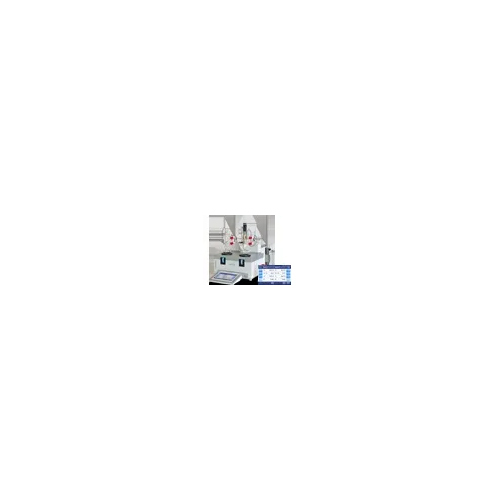
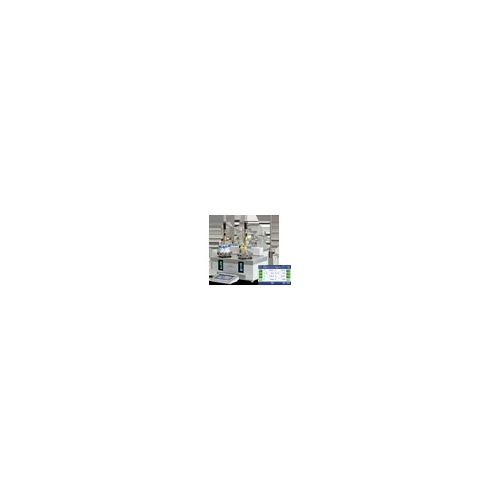
OptiMax Synthesis Workstation
Optimax Synthesis Workstation offered by our company, is designed and manufactured by our skilled workers by making use of premium grade of raw materials and upgraded technology, with the help of our skilled workers. This workstation is mainly used to make quick decisions and bring novel products to market faster. Optimax Synthesis Workstation provides a single, easy-to-use platform for developing safe, effective products and processes. Apart from this, our workstation has been designed to be compact, robust and simple to use. Process development benefits from improved traceability and reproducibility using this workstation. This is very effective as well as economical and great to utilize.
Features:
- Optimax Synthesis Workstation revolutionizes the work
- Very versatile and simple to use technology preferred
- Replaces round bottom flakes and jacketed vessels
- Gives considerable productivity benefits
- Yields high quality data too
- Very easy to purchase from us
- Low cost required
Cutting-Edge Automated SynthesisOptiMax offers advanced automation for chemical synthesis, dramatically improving laboratory throughput and precision. The system is engineered with chemical-resistant materials, a powerful control unit, and state-of-the-art data logging. From method development to routine synthesis, OptiMax ensures reproducible results and intuitive operation with its large touchscreen interface.
Versatile and Reliable PerformanceDesigned for a wide range of applications, OptiMax delivers excellent reliability across multiple reactor typesglass, metal, or PTFE-lined. The integrated heater and cooler system, in combination with accurate monitoring sensors, keeps temperatures steady even in challenging lab environments. Every function from stirring to measurement is seamlessly controlled for optimal experimental flexibility.
Comprehensive Safety and ConnectivityOperators benefit from robust safety measures, including over-temperature protection and an emergency stop. Built-in USB and Ethernet connectivity with export to CSV and PDF formats facilitate streamlined data handling and remote monitoring. The platform is IP21-rated, Windows compatible, and ready for integration into existing digital laboratory workflows.
FAQs of OptiMax Synthesis Workstation:
Q: How does the PID controller enhance process accuracy in the OptiMax Synthesis Workstation?
A: The PID controller continuously regulates temperature and stirring speed, ensuring precise and stable conditions throughout your experiment. This leads to enhanced reproducibility and minimizes deviations, which is essential for reliable chemical synthesis.
Q: What reactor vessels can I use with OptiMax, and what capacities are supported?
A: OptiMax is compatible with glass, metal, and PTFE-lined reactor vessels, supporting capacities from 100 mL to 1000 mL. This allows flexibility for a variety of experimental scales and chemical compatibility needs.
Q: When should the integrated safety features be utilized?
A: Over-temperature protection and the emergency stop should be used any time there is a risk of temperature excursions or operational anomalies. These features provide immediate responses to potential hazards, safeguarding users and laboratory equipment.
Q: Where can the OptiMax Synthesis Workstation be implemented?
A: OptiMax is designed for laboratories engaged in chemical synthesis and process development. With its moderate footprint (33 cm x 32 cm x 40 cm) and compatibility with standard electrical supplies (100-240 V AC), it is ideal for research institutes, industrial R&D labs, academic settings, and manufacturing environments within India and internationally.
Q: What data export options are available and how can results be accessed remotely?
A: Users can export experiment data in CSV or PDF formats via USB and Ethernet. The system supports remote access, enabling monitoring and control of experiments even when off-site, which is especially beneficial for collaborative projects or multi-location teams.
Q: How do the heating and cooling methods benefit experiment consistency?
A: The integrated thermostat with heat/cool exchange maintains precise temperature control between -20C and 180C. This wide and accurate range supports complex reaction conditions and ensures experiments run consistently, regardless of ambient environmental changes.