 English
 Spanish
 French
 German
 Italian
 Chinese (Simplified)
 Japanese
 Korean
 Arabic
 Portuguese
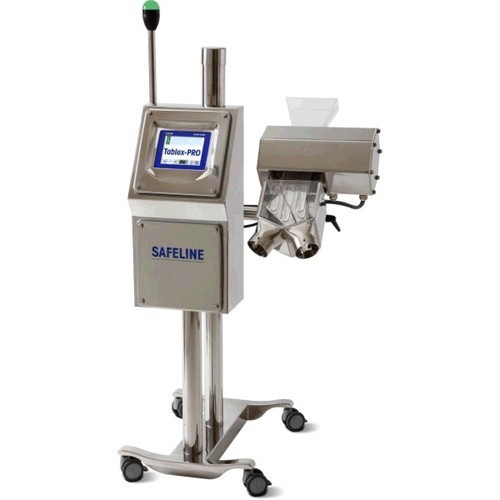
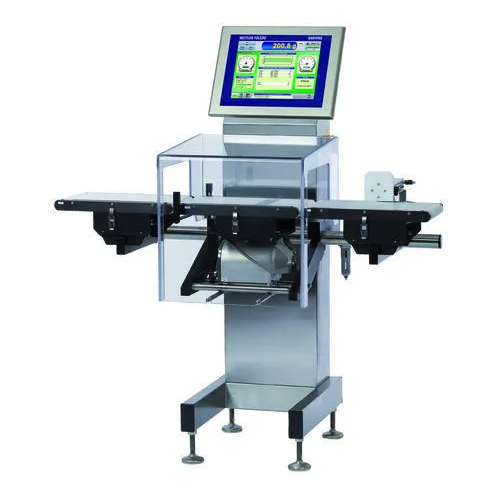
Pharmaceutical Metal Detector Systems
Product Details:
- Product Type Pharmaceutical Metal Detector Systems
- Material Stainless Steel
- Capacity Up to 8000 tablets/minute (varies by model)
- Computerized Yes
- Automatic Grade Automatic
- Control System Microprocessor based control panel
- Processing Type Detection of ferrous, non-ferrous & stainless steel contaminants
- Click to View more
X
Pharmaceutical Metal Detector Systems Price And Quantity
- 5°C - 45°C
- Mirror / matt finish available
- Audio and visual alarm on detection
- Digital LCD Display
- Up to 200 mm
- Available for different machine heights
- Multiple product preset memory
- IP65 dust and water resistant enclosure
- Tablet, capsule, and small packet
- Fully automatic reject flap with fail safe design
- Up to 150 mm
- High sensitivity for 0.3 mm Ferrous, 0.4 mm Non-Ferrous, 0.5 mm SS (subject to product)
- Adjustable, up to 25 meters/minute
Pharmaceutical Metal Detector Systems Product Specifications
- Approx. 150 W
- Around 80 kg
- Approx. 900 mm x 500 mm x 1400 mm
- Yes
- Automatic
- Stainless Steel
- Detection of ferrous, non-ferrous & stainless steel contaminants
- Microprocessor based control panel
- 230 V AC, 50 Hz
- Pharmaceutical Metal Detector Systems
- Silver (Metallic Finish)
- Up to 8000 tablets/minute (varies by model)
- 5°C - 45°C
- Mirror / matt finish available
- Audio and visual alarm on detection
- Digital LCD Display
- Up to 200 mm
- Available for different machine heights
- Multiple product preset memory
- IP65 dust and water resistant enclosure
- Tablet, capsule, and small packet
- Fully automatic reject flap with fail safe design
- Up to 150 mm
- High sensitivity for 0.3 mm Ferrous, 0.4 mm Non-Ferrous, 0.5 mm SS (subject to product)
- Adjustable, up to 25 meters/minute
Pharmaceutical Metal Detector Systems Trade Information
- All India
Product Description
Pharmaceutical Metal Detector Systems
For tablets, capsules
Designed to meet the exacting standards and regulations of the pharmaceutical industry, METTLER TOLEDO Safeline industrial metal detectors provide the ultimate solution in fully integrated product inspection and rejection systems for tablets, capsules, powders and granules.
Manufactured from mirror-polished stainless steel, and incorporating pharmaceutical-grade FDA-approved contact parts throughout, Tablex and Pharma GF systems provide compact, easy-clean, hygienic inspection solutions to meet the metal detection needs of pharmaceutical manufacturers.
An advanced detection coil design, combined with a choice of proven Safeline software, delivers unrivalled detection performance and on-line stability. This enables even the smallest contaminants to be detected and rejected from the product flow. Systems are designed to detect all possible metal contamination encountered in pharmaceutical manufacturing processes, including ferrous, non-ferrous and even the most difficult-to-detect non-magnetic stainless steels (grade 316). Contaminants less than 0.3mm in diameter can be readily detected and rejected.
Maximum Versatility and Mobility: Tablex industrial metal detector systems are designed to offer maximum flexibility in process areas. A compact footprint enables systems to be inserted into areas where space is restricted throughout pharmaceutical plants. Robust, low-profile, fully rotating castors provide ease of mobility, enabling the system to be utilised in multiple locations. Flexibility is further enhanced by the ability of the detection head to be adjusted easily (without the need for tools) in all three axes to suit any configuration.
Capturing Critical Access Data: Meeting the exacting requirements of FDA 21 CFR part 11 can be a challenge in some pharmaceutical processing environments. Tablex-PRO industrial metal detectors support full compliance with the standard by providing dedicated software to capture electronic signatures and other critical process data. This means you remain in total control of processes, and the necessary compliance data is always at hand.
Product details
| Application | Pharmaceutical, Medicine |
| Brand | METTLER TOLEDO |
| Model | MD-G |
| Alarm Mode | Vibration |
| Features | Rechargable Batteries |
| Sensitivity | Fe Dia.0.4mm; Sus304 Dia.0.8mm |
Advanced Detection Technology
The metal detector system employs high-sensitivity sensors capable of detecting metallic contaminants as small as 0.3 mm ferrous, 0.4 mm non-ferrous, and 0.5 mm stainless steel. Its computerized control panel facilitates precision in detection, ensuring pharmaceutical products maintain the highest safety standards.
User-Friendly Digital Interface
Equipped with a digital LCD display, operators enjoy intuitive navigation through system controls and real-time feedback. Multiple product preset memory means calibration is quick for different input types, such as tablets and capsules, reducing downtime between batches.
Hygienic and Durable Construction
Constructed from stainless steel and available in mirror or matt finish, the system upholds strict hygiene requirements in pharmaceutical environments. Its IP65 ingress protection ensures reliable performance in dusty or moist conditions, further safeguarding your production process.
Efficiency in Operation
Capable of processing up to 8,000 tablets per minute, the detector adapts with adjustable conveyor speed and height options to suit diverse production lines. The automatic reject flap works with a fail-safe design to remove contaminated items promptly, backed by audio-visual alarms for operator awareness.
FAQs of Pharmaceutical Metal Detector Systems:
Q: How does the pharmaceutical metal detector system identify and reject contaminants during production?
A: The system uses high-sensitivity sensors to detect ferrous, non-ferrous, and stainless steel contaminants in products such as tablets, capsules, and small packets. Upon detection, the computerized control panel activates a fully automatic reject flap, ensuring contaminated items are promptly removed from the production line with fail-safe reliability.Q: What product sizes and types is the metal detector suitable for in pharmaceutical manufacturing?
A: The system accommodates products with a maximum height of 150 mm and a pass width up to 200 mm. Its designed for tablets, capsules, and small packets, making it versatile for various pharmaceutical processing requirements.Q: When should operators adjust the conveyor speed or machine height?
A: Operators can adjust the conveyor speed, up to 25 meters per minute, and the height to optimize for different batch sizes or product dimensions. This flexibility ensures seamless integration into different production lines and efficient handling of products.Q: Where can the metal detector system be installed in a pharmaceutical facility?
A: Due to its compact dimensions (approx. 900 mm x 500 mm x 1400 mm) and IP65 dust- and water-resistant enclosure, the metal detector can be installed in manufacturing areas, quality control zones, or packaging rooms, providing robust contaminant detection across the facility.Q: What is the process for memory preset selection and product switching?
A: Operators use the digital LCD display to quickly select or change between multiple product preset memories. This process simplifies calibration and ensures fast transitions between various product types, minimizing downtime and boosting production throughput.Q: How does the alarm system improve safety during operation?
A: The audio and visual alarm systems activate upon contaminant detection, immediately notifying operators. This feature enhances response speed and operational safety, ensuring swift corrective action to maintain product purity.Q: What are the benefits of choosing a stainless steel, automatic metal detector for pharmaceutical production?
A: Stainless steel construction provides excellent durability and hygiene, meeting strict pharmaceutical standards. The automated features, such as the microprocessor-based control and reject mechanisms, streamline operations, reduce manual intervention, and enhance overall product safety and quality.Tell us about your requirement

Price:
Quantity
Select Unit
- 50
- 100
- 200
- 250
- 500
- 1000+
Additional detail
Mobile number
Email

Other Products in 'Product Inspection' category

Contact Details
Mettler-Toledo India Private Limited
GST : 27AABCM0779N1Z0
GST : 27AABCM0779N1Z0

- Amar Hill, Saki Vihar Road, Powai,Mumbai - 400072, Maharashtra, India
- Phone : 08045816537
- Ms Ekta Zemse (Executive Marketing)
- Mobile : 08045816537
-
 Send Inquiry
 Send Inquiry
|


 |
Mettler-Toledo India Private Limited
All Rights Reserved.(Terms of Use) Developed and Managed by Infocom Network Private Limited. |
