 English
 Spanish
 French
 German
 Italian
 Chinese (Simplified)
 Japanese
 Korean
 Arabic
 Portuguese
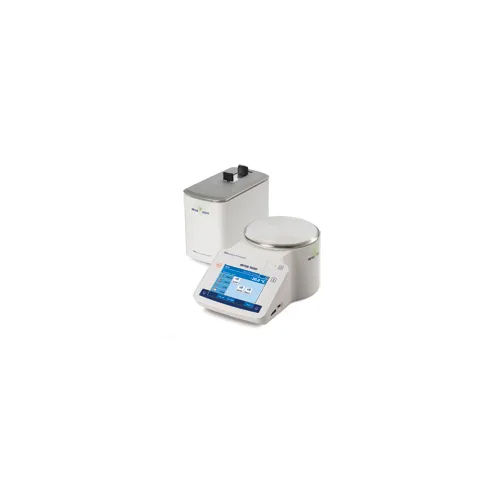
DP90 Dropping Point System
Product Details:
- Frequency 50/60 Hz
- Model No DP90
- Capacity Up to 2 samples per test
- Core Components Heater, sensor, glass tubes, sample holders
- Temperature Range Ambient to 400C
- Accuracy 0.5C
- Voltage 230 V
- Click to View more
DP90 Dropping Point System Product Specifications
- Automatic temperature ramp, digital timer, audible alarm
- Up to 400C
- Semi-Automatic
- Electric
- 230 V
- Dropping Point System
- Ambient to 400C
- 0.5C
- Dropping point determination of lubricants and greases
- Approx. 8 kg
- Heater, sensor, glass tubes, sample holders
- Up to 2 samples per test
- DP90
- 50/60 Hz
- Stainless steel, heat-resistant glass
- Digital LCD
- 300 mm x 220 mm x 390 mm
- Standard ASTM dimensions
- Max 85% RH non-condensing
- Digital PT100 sensor
- Spot lamp for observation
- Petroleum laboratories, chemical analysis
- Microprocessor based controller
- Built-in auto calibration
- Ceramic heating element
- Dropping point tubes, sample holders
- Manual and timed
- 10°C to 40°C
- Clear toughened observation window
- USB output for result transfer
- Adjustable buzzer
- Over-temperature protection
- 0.1°C
- 1 or 2 simultaneous samples
DP90 Dropping Point System Trade Information
- Australia, North America, South America, Eastern Europe, Western Europe, Middle East, Central America, Asia, Africa
- All India
Product Description
DP90 Dropping Point System :-
Dropping point determinations at subambient temperature can be carried out using a DP90 Dropping Point System. It consists of a control unit and a separate measuring cell, which can be placed into a refrigerator or deep freezer.
Wider Temperature Range:-
Dropping point determinations at subambient temperature can only be performed using a DP90 Dropping Point System. It consists of a control unit and a separate measuring cell, which can be placed into a refrigerator or deep freezer.
Reliable measurements in pharma, cosmetics and food industry:-
The DP90 combines all advantages of a DP70 with the possibility to start a measurement from -20 deg C. The minimum temperature is reached safely thanks to the excellent insulation of the furnace and use of a LED light source which prevents self warming of the measuring cell.
Complete result documentation:-
All results are securely archived and can be tracked at any time. Whether you print out results on a strip or network printer, save reports as PDF, or directly transfer all result files including video to a PC, you always get the maximum information possible from your measurements. In addition the result file in CSV format (comma separated values) enables the read-out of selected data by LIMS-software.
Fullfills increased regulatory needs:-
Access control with username and password, duplicate determination and perfect result documentation are only a few equipment characteristics which correspond to needs of regulatory compliance.
FAQ
1. DP90 Dropping Point System: What is it?
Ans - The DP90 Dropping Point System is a network of drop points that can be used to expeditiously and effectively transport items. Customers can drop off their items at predetermined locations, and a courier will pick them up and deliver them to their destination. This is how it works.
2. Describe the DP90 Dropping Point Systems operation.
Ans - The DP90 Dropping Point System enables clients to drop off their items at predetermined locations. Customers receive a special code that is linked to their products. The products are picked up by a courier for delivery to their destination once the code is scanned when they arrive at the appointed location.
3. In which locations are the DP90 Dropping Points?
Ans - The DP90 Dropping Points are spread out around the nation in busy cities, airports and railway stations.
4. How much does the DP90 Dropping Point System cost to use?
Ans - The cost of using the DP90 Dropping Point System is determined on the size, weight, and distance of the items being dropped off.
5. How secure is the DP90 Dropping Point System?
Ans - The DP90 Dropping Point System is safe, to answer your question. To make sure that commodities are handled safely and securely at all times, the system is outfitted with security features including CCTV cameras and access control systems.
Precision Dropping Point Analysis
The DP90 Dropping Point System offers reliable and repeatable measurements for lubricants and greases. Its advanced microprocessor and digital thermometer ensure consistency and accuracy, while features like automatic temperature ramping and a digital timer streamline the process. Designed in compliance with ASTM standards, it fits seamlessly into laboratory operations, enabling high-quality chemical analysis with efficiency.
User-Friendly and Safe Operation
Operating the DP90 is straightforward, with both manual and timed modes, a clear LCD display, and intuitive controls. Safety is prioritized through over-temperature protection and adjustable alarms. The observation windowbuilt from toughened glassprovides a clear view of the process, while the included dropping point tubes and sample holders adhere to standard laboratory dimensions for convenience.
FAQs of DP90 Dropping Point System:
Q: How do I operate the DP90 Dropping Point System for sample analysis?
A: To operate the DP90, insert up to two prepared lubricant or grease samples in the supplied sample holders and tubes. Set your desired temperature or use the automatic ramp mode via the digital controller, and observe the samples through the clear window as the ceramic heater raises the temperature. The systems digital display and adjustable buzzer will guide you through each stage until the dropping point is detected.Q: What are the main benefits of using the DP90 for petroleum laboratory testing?
A: The DP90 provides rapid and precise dropping point determinations, minimizing human error with its microprocessor-based controls, digital PT100 sensor, and automatic calibration. Benefits include USB data export for efficient reporting, safety features like over-temperature protection, and compliance with ASTM standards, making it an optimal choice for quality assurance in petroleum laboratories.Q: When should I calibrate the DP90 Dropping Point System?
A: Calibration should be performed regularly as part of routine laboratory practice, especially before critical analyses or after maintenance. The DP90 features built-in auto calibration, simplifying the process and maintaining measurement accuracy without the need for external calibration tools.Q: Where can the DP90 Dropping Point System be used effectively?
A: The DP90 is designed for use in petroleum laboratories, quality control departments, and research settings where precise dropping point measurements of lubricants and greases are needed. Its robust design allows usage in various industries, including those in India, and accommodates ambient temperatures from 10C to 40C with up to 85% relative humidity.Q: What is the procedure for transferring results from the DP90?
A: Results can be easily exported via the systems integrated USB output. After testing is complete, simply connect a USB flash drive to the DP90 and follow the on-screen instructions to export temperature data and results, streamlining documentation and data analysis.Q: How does the DP90 ensure sample safety and user protection during testing?
A: Safety features include an over-temperature protection system that automatically halts heating above safe limits, an adjustable buzzer for alerting at critical stages, a spot lamp for enhanced visibility, and a toughened glass observation window to safeguard users during testing.
Price:
- 50
- 100
- 200
- 250
- 500
- 1000+

Other Products in 'Analytical Instruments' category

GST : 27AABCM0779N1Z0

- Amar Hill, Saki Vihar Road, Powai,Mumbai - 400072, Maharashtra, India
- Phone : 08045816537
- Ms Ekta Zemse (Executive Marketing)
- Mobile : 08045816537
-
 Send Inquiry
 Send Inquiry
|


 |
Mettler-Toledo India Private Limited
All Rights Reserved.(Terms of Use) Developed and Managed by Infocom Network Private Limited. |
