 English
 Spanish
 French
 German
 Italian
 Chinese (Simplified)
 Japanese
 Korean
 Arabic
 Portuguese
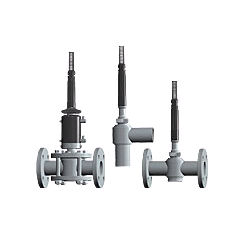
Flow-through Process Adaptions
Product Details:
- Gas Pressure 100 kPa
- Response Time 1 s
- Measuring Range 0.1-10000 Pa
- Interface Type RS232
- Test Range 0-9999 Pa
- Frequency 50 Hz
- Display Type Digital display
- Click to View more
X
Flow-through Process Adaptions Product Specifications
- 0.1-10000 Pa
- 0-9999 Pa
- RS232
- 1 s
- 100 kPa
- 100x100 mm
- Table-top
- 50 Hz
- Digital display
- Microcomputer automatic control
- 0.1 Pa
- Single channel
- 300 mm
- 40%-85% RH
- 57 mm
- Laboratory permeability and filtration analysis
- AC 220V, 50Hz
- 0-99 min adjustable
- 5 L/min
- Filter media, mask, respirator, textile permeability testing
- 40 kg
- Automatic
- 10-40
- 1
- Automatic calibration, microcomputer control, digital display, data storage
- 6 mm
- AC 220V
- Flow-through Process Adaptions Tester
- 2% FS
- Indoor, dust-free laboratory
- Over-pressure protection, emergency stop switch
- Programmable audible and visual alerts
- Automatic and manual
- RoHS compliant
- Supports woven, non-woven, coated fabrics
- Up to 1000 test records
- PC software for analysis and reporting
- Quick-release clamp system
- Tool-free access for cleaning and calibration
- English
Flow-through Process Adaptions Trade Information
- Central America, Eastern Europe, Middle East, South America, Asia, Western Europe, North America, Australia, Africa
- All India
Product Description
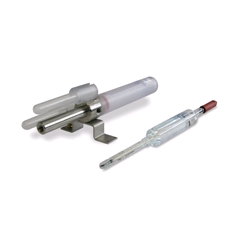
Flow Thorough Cell
Proven, rugged pipe adapters for process analytical solutions.
Flow-through housings from METTLER TOLEDO are available in various basic designs for measuring points in a pipe or bypass. They allow the introduction of electrodes/sensors into the sample media, either directly or via METTLER TOLEDO InTrac or InFit housings. Choice of materials, pipe diameters and process connections are available.
Features and Benefits :-
- In-line fitting for metal or plastic pipes or bypasses.
- Versions for InTrac or InFit housings or direct mounting of the electrode/sensor.
- Stainless steel and polymer versions available.
Advanced Control and Accurate Measurement
Equipped with microcomputer automatic control and a digital display, this tester ensures precise readings with a resolution of 0.1 Pa and an accuracy of 2% FS. Its automatic and manual calibration features make it simple to maintain optimal performance with minimal operator effort.
Flexible and User-Friendly Operation
The instrument accommodates single-channel testing for specimens sized 100x100 mm with a fast test speed of 5 L/min. Tool-free access enables straightforward cleaning and calibration, while the quick-release clamp system makes specimen swapping seamless during routine laboratory activities.
Comprehensive Safety and Connectivity
Built-in over-pressure protection, an emergency stop switch, and programmable alarm functions support robust safety. It connects via RS232 to PC software, facilitating advanced analysis and report generation, and runs efficiently on standard AC 220V, 50Hz power.
FAQs of Flow-through Process Adaptions:
Q: How does the Flow-through Process Adaptions Tester ensure the safety of operators during use?
A: This equipment is equipped with over-pressure protection systems and an emergency stop switch. These features are designed to prevent operational hazards and allow immediate shutdown if needed, ensuring laboratory personnel remain safe during testing.Q: What filter media materials can be tested with this equipment?
A: The tester is compatible with a broad range of materials, including woven, non-woven, and coated fabrics. This flexibility makes it suitable for applications such as mask, respirator, and general textile permeability evaluations.Q: What steps are involved in the calibration process?
A: Calibration can be performed either automatically or manually through the intuitive digital interface. Automatic calibration streamlines setup, while manual calibration allows for fine-tuning to meet specific testing protocols.Q: When should data storage be utilized, and what capacity does it offer?
A: Data storage is intended for tracking test results over time. The system can retain up to 1000 test records, supporting comprehensive data management for quality assurance and research documentation.Q: Where should the tester be installed for optimal operation?
A: For best performance, the tester should be placed in a dust-free, indoor laboratory environment. Stable temperature (10C to 40C) and humidity (40%85% RH) help ensure the accuracy and reliability of test results.Q: What is the process for specimen loading and replacement?
A: The instrument features a quick-release clamp system that simplifies specimen installation and removal. This mechanism allows for fast and efficient testing processes, particularly useful in high-throughput laboratory settings.Q: What are the main benefits of connecting the tester to PC software?
A: PC connectivity enables advanced data analysis, report generation, and effective record management through the supplied software. This integration streamlines laboratory workflows and enhances the presentation of test results.Tell us about your requirement

Price:
Quantity
Select Unit
- 50
- 100
- 200
- 250
- 500
- 1000+
Additional detail
Mobile number
Email

Other Products in 'Process Analytics' category

Contact Details
Mettler-Toledo India Private Limited
GST : 27AABCM0779N1Z0
GST : 27AABCM0779N1Z0

- Amar Hill, Saki Vihar Road, Powai,Mumbai - 400072, Maharashtra, India
- Phone : 08045816537
- Ms Ekta Zemse (Executive Marketing)
- Mobile : 08045816537
-
 Send Inquiry
 Send Inquiry
|


 |
Mettler-Toledo India Private Limited
All Rights Reserved.(Terms of Use) Developed and Managed by Infocom Network Private Limited. |
