 English
 Spanish
 French
 German
 Italian
 Chinese (Simplified)
 Japanese
 Korean
 Arabic
 Portuguese
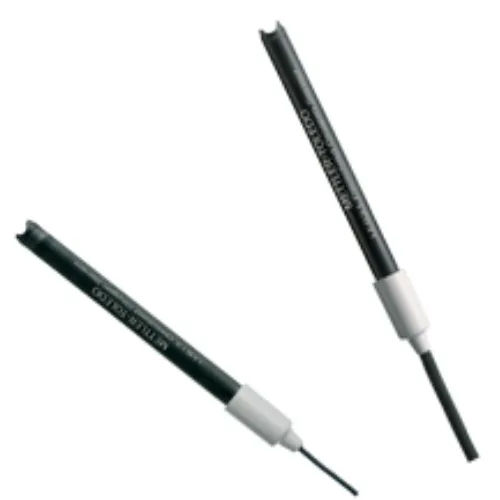
LE Dissolved Oxygen Sensors
Product Details:
- Size 185 mm x 40 mm (L x D)
- Power Source DC Powered
- Function Measurement of dissolved oxygen in liquid samples
- Interface RS485 Modbus
- Features High stability, automatic temperature compensation, easy installation
- IP Rating IP68
- Usage Industrial monitoring, aquaculture, water treatment
- Click to View more
LE Dissolved Oxygen Sensors Product Specifications
- High stability, automatic temperature compensation, easy installation
- 0.01 mg/L
- IP68
- LCD
- Industrial monitoring, aquaculture, water treatment
- Wired
- 0-20 mg/L
- Black & Silver
- Measurement of dissolved oxygen in water
- Plastic and Stainless Steel
- Automatic
- 12-24V DC
- 185 mm x 40 mm (L x D)
- Dissolved Oxygen Sensor
- DC Powered
- Measurement of dissolved oxygen in liquid samples
- Digital
- RS485 Modbus
- ABS & 316L Stainless steel
- Replaceable membrane cap
- Digital RS485
- Two point calibration
- Electrochemical
- 0 - 60 C
- 30 Seconds
- 0-4 Bar
- Submersible
- Corrosion resistant, waterproof
- -20 to 80 C
- 5 meters (customizable)
LE Dissolved Oxygen Sensors Trade Information
- Australia, North America, South America, Western Europe, Middle East, Africa, Central America, Asia, Eastern Europe
- All India
Product Description
The Light Edition (LE) sensors are tailor-made for high price/performance ratio. The offering includes sensors for all common applications and focuses on low maintenance and easy handling.
It is the perfect match with the Five and Education Line meters.
The concentration of dissolved oxygen in liquid samples is measured with LE dissolved oxygen sensors, which are probes. They are frequently employed in a variety of industries, such as food and beverage processing, wastewater treatment, and environmental monitoring.
The "low energy" prefix in the name of LE dissolved oxygen sensors stands for the fact that these sensors require little power to function. Their suitability for use in remote areas or in situations where battery life is a concern makes them ideal.
LE dissolved oxygen sensors typically consist of a probe that is submerged in the liquid sample and has a sensing device. The sensing component measures the concentration of dissolved oxygen in the sample using a technique like polarographic or galvanic measurement. In order to account for sample temperature fluctuations, which might impair measurement accuracy, the sensor may also include a temperature sensor.
For application in a variety of sample types, such as fresh water, salt water, and liquids with high quantities of dissolved solids, LE dissolved oxygen sensors may be created. They may also be made for usage in particular fields, including biotechnology or pharmaceuticals, where accurate detection of dissolved oxygen is essential for quality assurance.
Overall, LE dissolved oxygen sensors provide precise and dependable detection of dissolved oxygen levels in liquid samples, making them an invaluable tool for many sectors. They have low power consumption, long-lasting construction, and user-friendly features that make them an efficient choice for a variety of applications.
FAQ
1. A dissolved oxygen sensor is what, exactly?
Ans - A device used to gauge how much oxygen is dissolved in a liquid is called a dissolved oxygen sensor. The amount of oxygen accessible for aquatic organisms is often measured as part of the monitoring of water quality.
2. What role does dissolved oxygen play in water?
Ans - Dissolved oxygen is a crucial sign of the purity of the water. It is used to assess a body of water's level of pollution and aquatic life compatibility. Dissolved oxygen levels can affect aquatic life negatively at low levels and excessive pollution at high levels.
3. What distinguishes an optical dissolved oxygen sensor from a polarographic one?
Ans - Polarographic dissolved oxygen sensors use an electrical current to measure the amount of oxygen in a liquid. Using a particular dye, optical dissolved oxygen sensors track how much light is absorbed to determine how much oxygen is contained in a liquid.
4. How deep can an LE dissolved oxygen sensor go?
Ans - LE dissolved oxygen sensors are made to function down to 100 metres (328 ft) of depth.
5. What is the recommended frequency for calibrating LE dissolved oxygen sensors?
Ans - If necessary, calibrate LE dissolved oxygen sensors more frequently than every two years.
Advanced Electrochemical Sensing Technology
This dissolved oxygen sensor incorporates proven electrochemical detection, enabling precise monitoring of oxygen levels in demanding environments. The sensors automatic temperature compensation ensures stable and accurate readings, even with fluctuating temperatures ranging from 0C to 60C.
Rugged, Submersible Construction
Constructed with sturdy ABS and 316L stainless steel, the sensor boasts high corrosion resistance and IP68-rated waterproofing. The submersible design makes it ideal for continuous deployment in aquaculture ponds, water treatment plants, and other industrial applications.
User-Friendly Digital Interface
Equipped with RS485 Modbus connectivity and a clear LCD display, the sensor provides real-time digital data for easy integration into monitoring systems. Calibration is straightforward with a two-point process, and maintenance is streamlined by the replaceable membrane cap.
FAQs of LE Dissolved Oxygen Sensors:
Q: How does the LE Dissolved Oxygen Sensor ensure accurate readings in varying temperatures?
A: This sensor utilizes automatic temperature compensation within the 060C range, optimizing dissolved oxygen readings regardless of environmental changes. This feature is particularly valuable for outdoor installations or processes with temperature fluctuations.Q: What is the recommended installation process for this sensor, and where can it be used?
A: Installation is simple thanks to the submersible design and IP68 rating. Mount the sensor directly in tanks, ponds, or pipelines where dissolved oxygen needs to be monitored, such as in aquaculture, wastewater treatment, and industrial water applications.Q: When is calibration required for the sensor, and what steps are involved?
A: Calibration is typically recommended during initial setup and periodically as part of routine maintenance. The sensor supports a straightforward two-point calibration process to ensure ongoing measurement accuracy.Q: What maintenance does the LE Dissolved Oxygen Sensor require?
A: Routine maintenance is minimal and mainly involves replacing the membrane cap, which maintains the sensors performance. The robust housing materials and corrosion-resistant design extend the devices operational life.Q: How does digital RS485 Modbus output benefit my monitoring system?
A: RS485 Modbus digital output ensures reliable long-distance data transmission, making it easy to integrate the sensor into centralized digital monitoring networks for real-time tracking and automated control.Q: What are the main advantages of using this sensor for dissolved oxygen monitoring?
A: Key benefits include high measurement precision (0.01 mg/L), fast response (30 seconds), automatic operation, easy installation, robust construction, low maintenance, and compatibility with digital monitoring systems.
Price:
- 50
- 100
- 200
- 250
- 500
- 1000+

Other Products in 'Laboratory Consumables & Accessories' category

GST : 27AABCM0779N1Z0

- Amar Hill, Saki Vihar Road, Powai,Mumbai - 400072, Maharashtra, India
- Phone : 08045816537
- Ms Ekta Zemse (Executive Marketing)
- Mobile : 08045816537
-
 Send Inquiry
 Send Inquiry
|


 |
Mettler-Toledo India Private Limited
All Rights Reserved.(Terms of Use) Developed and Managed by Infocom Network Private Limited. |
