
InLab ORP/Redox Electrodes

InLab ORP/Redox Electrodes

Product Details:

  • Features Low maintenance, refillable or gel, high chemical resistance
  • IP Rating IP67 (waterproof)
  • Function ORP/Redox potential measurement in aqueous solutions
  • Automatic Grade Automatic measurement with meter
  • Size Length: typically 120 mm, Diameter: 12 mm
  • Application Water quality analysis, environmental monitoring, process control
  • Usage Laboratory, field, and industrial measurements
  • Click to View more
X

InLab ORP/Redox Electrodes Product Specifications

  • Glass body, Platinum tip
  • ORP/Redox potential measurement in aqueous solutions
  • Not Required (Passive device)
  • Automatic measurement with meter
  • Laboratory, field, and industrial measurements
  • ORP/Redox Electrode
  • Water quality analysis, environmental monitoring, process control
  • Length: typically 120 mm, Diameter: 12 mm
  • BNC connector or specified cable
  • BNC or proprietary connection
  • Transparent / Grey
  • -2000 mV to +2000 mV
  • 1 mV
  • IP67 (waterproof)
  • Low maintenance, refillable or gel, high chemical resistance
  • < 30 seconds to 95% value
  • ISO 9001 and ISO 14001 certified
  • Store in electrode storage solution
  • Pre-calibrated, periodic calibration recommended
  • Electrochemical measurement of redox potential
  • Approx. 1 meter (may vary)
  • Silver/Silver Chloride (Ag/AgCl)
  • 1 to 13
  • 3 mol/L KCl
  • 0°C to 80°C

InLab ORP/Redox Electrodes Trade Information

  • Australia, North America, South America, Eastern Europe, Western Europe, Middle East, Africa, Central America, Asia
  • All India

Product Description

InLab ORP/Redox Electrodes


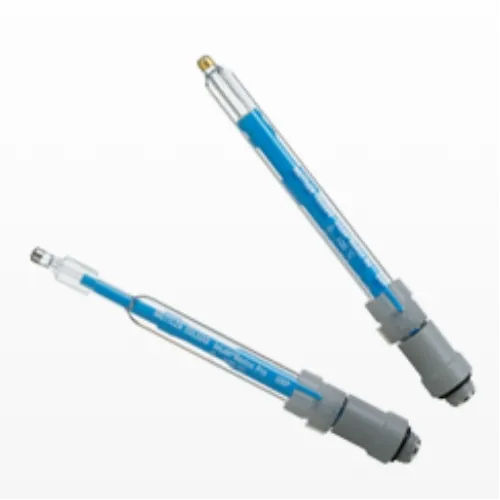
With the six combined ORP electrodes and the four metal half-cells, the full spectrum of applications is covered. The measuring signal of the redox electrode is generated on the surface of the precious metal by an exchange of electrons with the oxidation-reduction system of the measuring medium.

Platinum electrodes cover the majority of applications. In the case of highly oxidizing samples, it is best to use a gold electrode. Silver electrodes are primarily used for silverbased electrochemistry, e.g. chloride determination.


FAQ


1. How do ORP/Redox electrodes work?

Ans - The oxidation-reduction potential (ORP) of a specific solution is measured by ORP/Redox electrodes, which are specialised probes. The ORP/Redox electrode can be used to check the quality of food, water, and other liquids by detecting the presence of specific substances in a solution. 

2. How does an electrode for ORP/Redox function?

Ans - The ORP/Redox electrode is made up of two components: a working electrode and a reference electrode. The working electrode's voltage is measured in relation to a reliable source of voltage called the reference electrode. The oxidation-reduction potential of the solution is measured using the working electrode, and the voltage for comparison is provided by the reference electrode. 

3. What kinds of solutions can an ORP/Redox electrode measure? 

Ans - Any type of solution's oxidation-reduction potential can be measured using ORP/Redox electrodes. Water, food, drinks, acids, bases, and other liquids are examples of common solutions that can be tested with an ORP/Redox electrode. 

4. Approximately how frequently should an ORP/Redox electrode be calibrated? 

Ans - To obtain reliable results, ORP/Redox electrodes should be calibrated frequently. The type of application and environment in which the electrode is used determine how frequently it needs to be calibrated. 

5. What temperature should an ORP/Redox electrode be stored at?

Ans - An ORP/Redox electrode should be stored at a temperature of 4 deg C (39 deg F). To guarantee the electrode's good operation and accuracy, it must be stored in a cool, dry environment. 


Efficient Electrochemical Measurement

Perform accurate and reliable redox potential determinations with the InLab ORP/Redox Electrodes. Utilizing an advanced silver/silver chloride reference system and glass body construction, these electrodes ensure high stability and repeatability for a range of laboratory and industrial tasks.


Built for Versatile Applications

Engineered to operate in diverse environments, from water treatment facilities to environmental fieldwork, these electrodes feature chemical-resistant materials, refillable or gel options, and a robust IP67 waterproof rating, making them resilient for multiple uses across different sectors.


Simplicity in Use and Maintenance

Enjoy effortless operation with pre-calibrated accuracy and a fast response time. Maintenance is minimized thanks to their durable construction and straightforward storage requirements. Whether you are a researcher, exporter, or service provider, these electrodes offer dependable performance.

FAQs of InLab ORP/Redox Electrodes:


Q: How should I store the InLab ORP/Redox Electrodes to ensure their longevity?

A: For optimal longevity, store the electrodes in electrode storage solution when not in use. Avoid letting the sensor tip dry out, as this can negatively affect response time and measurement accuracy.

Q: What is the process for measuring redox potential with these electrodes?

A: Simply connect the electrode to a compatible meter using the BNC (or specified) connector. Immerse the glass body with platinum tip into your sample solution. The electrode passively transmits the ORP potential to the meter, providing an accurate reading within 30 seconds.

Q: When should I calibrate the InLab ORP/Redox Electrode, and how often is it required?

A: The electrodes are pre-calibrated, but periodic calibration is recommended to maintain high measurement accuracy. The frequency depends on your applications requirements and the conditions under which the electrode is used.

Q: Where can these electrodes be used effectively?

A: They are suitable for laboratory analysis, industrial process monitoring, field testing, and environmental water quality assessments. Their chemical resistance and IP67 waterproof rating make them adaptable to various aqueous environments.

Q: What are the benefits of using the Ag/AgCl reference system in these electrodes?

A: The silver/silver chloride reference system provides stable, low-drift measurements, promoting accurate and dependable redox potential readings across a wide pH (113) and temperature (080C) range.

Q: How does the electrodes automatic operation work?

A: The electrode is a passive device and does not require a separate power supply. When connected to a meter, it automatically measures redox potential as soon as it is immersed in the solution, simplifying the user experience.

Tell us about your requirement
product

Price:

Quantity
Select Unit

  • 50
  • 100
  • 200
  • 250
  • 500
  • 1000+
Additional detail
Mobile number

Email

Other Products in 'Laboratory Consumables & Accessories' category


Back to top
trade india member
Mettler-Toledo India Private Limited All Rights Reserved.(Terms of Use)
Developed and Managed by Infocom Network Private Limited.