 English
 Spanish
 French
 German
 Italian
 Chinese (Simplified)
 Japanese
 Korean
 Arabic
 Portuguese
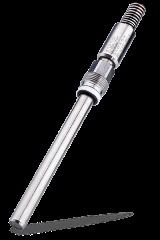
Medium to High Turbidity Measurement (Backscatter Light Technology)
Product Details:
- Humidity 0 - 95% RH non-condensing
- Automation Grade Automatic
- Response Time <2 seconds
- Mounting Type Threaded or submersible
- Accuracy 2% of reading or 0.5 NTU
- Max Height 198 mm (sensor length)
- Gas Pressure N/A (Liquid phase measurement)
- Click to View more
X
Medium to High Turbidity Measurement (Backscatter Light Technology) Product Specifications
- Sensor diameter 38 mm
- <2 seconds
- Automatic
- 0 - 95% RH non-condensing
- Graphical LCD / digital output
- G1/2
- N/A (continuous optical measurement)
- Medium to high turbidity water and process fluids
- Online Turbidity Analyzer
- N/A (Liquid phase measurement)
- 198 mm (sensor length)
- Threaded or submersible
- 2% of reading or 0.5 NTU
- Backscatter light technology, auto-clean, robust IP68 sensor
- Continuous online monitoring
- 12...24 VDC
- Contact surface: 25 mm2
- Real-time continuous
- 0.1 NTU
- -5C to +55C (operating)
- Fixed (optical measurement)
- Unlimited sample flow
- 4-20 mA analog, RS485 (Modbus)
- 3.5 Kg
- 10 - 5,000 NTU
- Microprocessor-based digital control
- 12...24 VDC
- 0 to 5,000 NTU
- High impact-resistant body
- Single-channel
- Up to 100 L/min (depending on piping)
- Programmable relay
- 880 nm infrared LED
- Automatic wiper integrated
- IP68 fully waterproof
- Optional
- 316L stainless steel, sapphire optical window
- Multilingual support
- Threaded, clamp or immersion accessories
- Factory calibrated; user calibration available
- Modbus RTU, 4-20 mA, pulse
- -20C to +70C
- Standard 5 m (custom lengths available)
- CE certified
Medium to High Turbidity Measurement (Backscatter Light Technology) Trade Information
- Western Europe, Central America, Asia, North America, Eastern Europe, Middle East, South America, Australia, Africa
- All India
Product Description
Medium to High Turbidity Measurement (Backscatter Light Technology)
- Functioning on the basis of optical fiber technology-(Backscatter Light Technology)
- Broad measurement range from medium to high turbidity - quick process adaption and easy installation.
- Suitable for biopharmaceutical and chemical processes
- Real in-line multi-point calibration
- Quick process adaption with 12mm
- allows easy static and retractable installation
Product details
| Weight | 3kg |
| Brand | METTLER TOLEDO |
| Material | Stainless steel |
Cutting-Edge Turbidity Sensing for Challenging Environments
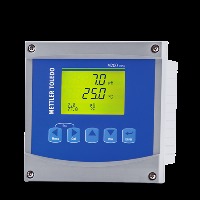
The Online Turbidity Analyzer employs backscatter light technology, enabling accurate measurements in tough conditions with medium to high turbidity levels. Its robust 316L stainless steel build and sapphire optical window deliver exceptional resistance to harsh chemicals and mechanical impact, ensuring long service life. The IP68 waterproof rating makes it perfectly suited for permanent submersion, whether youre monitoring water treatment plants, industrial effluent, or processing lines.
Flexible Integration and User-Friendly Operation
With support for Modbus RTU, 4-20 mA, and pulse outputs, this turbidity sensor fits seamlessly into diverse automation architectures. Its graphical LCD, multilingual display, and programmable relay alarms make operation and monitoring straightforward. Factory calibration ensures immediate accuracy, while user calibration caters to unique on-site requirements. Automatic cleaning and optional data logging further reduce maintenance effort and provide reliable, continuous data for process control.
FAQs of Medium to High Turbidity Measurement (Backscatter Light Technology):
Q: How does the backscatter light technology measure turbidity in this analyzer?
A: This analyzer uses 880 nm infrared LED to emit light into the sample. Particles in the water scatter the light back toward the sensor, and the intensity of this backscattered light is directly measured by advanced optics. The resulting signal is proportional to the turbidity, allowing precise, real-time quantification from 10 to 5,000 NTU.Q: What are the primary installation methods and process connections available?
A: The analyzer is highly versatile and can be installed using threaded, clamp, or immersion accessories. This allows mounting in pipes, tanks, or open channels. The IP68 rating means it can remain submerged during operation, enhancing installation flexibility for various industrial and municipal applications.Q: When is user calibration recommended, and how is it performed?
A: While the sensor is factory calibrated for immediate use, user calibration is advisable when operating conditions differ significantly from standard references, or for compliance with internal quality protocols. Calibration is performed through the digital interface, guided by on-screen prompts, using known turbidity standards to ensure measurement accuracy.Q: Where is this turbidity analyzer most beneficially used?
A: It excels in environments with medium to high turbidity, such as wastewater treatment plants, industrial process control, and monitoring of process fluids. The robust construction, waterproof rating, and automatic wiper make it ideal for sites with challenging water quality and high potential for fouling.Q: What makes the sensor suitable for continuous online monitoring in harsh environments?
A: The combination of a high-impact-resistant 316L stainless steel body, scratch-resistant sapphire window, and IP68 waterproof rating guarantees durability under demanding conditions. Its integrated automatic wiper minimizes performance loss due to fouling, ensuring stable, maintenance-light operation.Q: How does the device interface with control systems, and what data outputs are available?
A: The sensor supports 4-20 mA analog output and Modbus RTU over RS485 for easy integration with SCADA or PLC systems. It also provides pulse and programmable relay outputs for direct alarm or control actions. An optional data logger captures and stores measurements for later analysis.Tell us about your requirement

Price:
Quantity
Select Unit
- 50
- 100
- 200
- 250
- 500
- 1000+
Additional detail
Mobile number
Email

Other Products in 'Process Analytics' category

Contact Details
Mettler-Toledo India Private Limited
GST : 27AABCM0779N1Z0
GST : 27AABCM0779N1Z0

- Amar Hill, Saki Vihar Road, Powai,Mumbai - 400072, Maharashtra, India
- Phone : 08045816537
- Ms Ekta Zemse (Executive Marketing)
- Mobile : 08045816537
-
 Send Inquiry
 Send Inquiry
|


 |
Mettler-Toledo India Private Limited
All Rights Reserved.(Terms of Use) Developed and Managed by Infocom Network Private Limited. |
