 English
 Spanish
 French
 German
 Italian
 Chinese (Simplified)
 Japanese
 Korean
 Arabic
 Portuguese
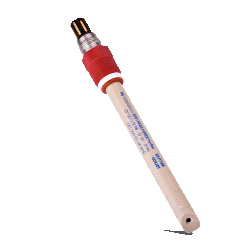
Non Glass pH Meter
Product Details:
- Number of Specimens Single Probe
- Response Time 1 sec
- Application Measuring solution pH without glass electrode
- Power Supply 9V Battery
- Specimen Size Compatible with standard samples
- Max Height 170 mm
- Operating Voltage 9V DC
- Click to View more
Non Glass pH Meter Product Specifications
- Compatible with standard samples
- 9V Battery
- 170 mm
- 9V DC
- 1 sec
- Single Probe
- Automatic
- Approx. 300g
- Measuring solution pH without glass electrode
- For field and laboratory pH measurement
- BNC Connector
- Standard BNC
- Handheld
- 85%RH
- Digital LCD
- Non Glass pH Meter
- Manual
- Non-glass ISFET sensor, portable, waterproof
- 0C to 60C
- 0.05 pH
- 0.01 pH
- 0.00 to 14.00 pH
- pH 0.00 to 14.00
- IP65
- Yes
- Field and indoor use
- Solid-state sensor (no glass)
- ISFET (Ion Sensitive Field Effect Transistor)
- 170 x 37 x 37 mm
- Yes
- -10°C to 60°C
- Approx. 150 hours
- Automatic (1 or 2 points)
Non Glass pH Meter Trade Information
- Central America, North America, South America, Eastern Europe, Western Europe, Middle East, Asia, Australia, Africa
- All India
Product Description
Non Glass pH Meter
Hygienically designed probes for maximum process safety
A non-glass, unbreakable and sterilizable solid-state ISFET pH electrode specially intended for use in the Biopharma and Food and Beverage industries. It complies with 3-A sanitary standards and FDA regulations and has been tested to EHEDG requirements.
Features and Benefits :-
- Unbreakable solid-state ISFET electrode
- Special design
- Industrial-standard connector
- Suitable for automated cleaning systems
- Non Glass pH Meter responds quickly
- Precise measure is done even in rapidly changing environment
- Offers indestructible shaft
- Your products are kept safe
- IT is corrosion and moisture resistant
- Allows for lab calibration and predictive maintenance
- Unbreakable for the highest level of product security
- Long calibration intervals mean less maintenance.
- Sterilization compatible
- Safe to operate
- Easy installation
- Widely used and highly appreciated
- Cost effective in nature
| Application | Laboratory |
| Usage/Application | Laboratory |
| Type Of Ph Meter | Hand-Held |
| Brand | METTLER TOLEDO |
| Product Type | Digital |
| Power | Electric |
| Packaging | Cardboard Packing Air & Road Worthy |
| Model Number | pH Probe, Non-Glass (ISFET) |
FAQ
1. What is a non-glass pH metre, exactly?
Ans - When measuring the acidity or alkalinity of a solution without the use of a glass electrode, a non-glass pH metre is used. These pH metres typically test the solution's pH using an electrode made of plastic or another polymer.
2. How precise is a pH metre made of non-glass?
Ans - Non-glass pH metre are frequently precise to 0.1 pH units or better. But accuracy varies from model to model and manufacturer to manufacturer.
3. What kinds of solutions can a pH metre made of material other than glass measure?
Ans - A wide variety of solutions, including aqueous solutions, organic solutions, and even certain solid samples, can be measured by non-glass pH metres.
4. How frequently should a pH metre made of a non-glass be calibrated?
Ans - To ensure accuracy, non-glass pH metres should normally be calibrated every two to three months.
5. What advantages can non-glass pH metres offer?
Ans - In general, non-glass pH metres are less expensive than glass pH metres and more durable against corrosion. These metres frequently require less maintenance and are simpler to operate.
Advanced ISFET Technology
This pH meter features a non-glass ISFET solid-state sensor. The technology is known for rapid, stable pH readings and eliminates breakage risks associated with glass electrodes. Perfect for environments demanding durability and safety, it enables field and lab users to obtain high-precision results in a matter of seconds.
User-Friendly and Efficient
Automatic calibration (1 or 2 points) and a digital LCD display simplify operation for professionals and beginners alike. With a response time of 1 second and easy-to-understand controls, this meter ensures efficient measurement for varied liquid samples. Its auto shut off and low battery indicator extend operational life, making it highly practical.
Durable, Portable, and Waterproof
Encased in a waterproof IP65-rated body, this meter endures rugged field and laboratory conditions. Its compact dimensions and lightweight build (approx. 300g) enhance portability, while solid-state design removes concerns about electrode fragility, making it suitable for frequent travel and outdoor measurements.
FAQs of Non Glass pH Meter:
Q: How does the ISFET sensor in this non-glass pH meter function?
A: The ISFET (Ion Sensitive Field Effect Transistor) sensor measures pH by detecting ion concentrations directly on its semiconductor surface, without involving any glass component. This solid-state approach provides rapid, stable pH readings and increases durability compared to traditional glass electrodes.Q: What is the calibration process for this pH meter?
A: Calibration is fully automatic, allowing 1 or 2-point procedures. Simply immerse the probe into standard buffer solutions as prompted, and the device automatically adjusts its measurements, ensuring accurate readings without manual intervention.Q: Where can I use this pH meter?
A: This pH meter is designed for both field and indoor laboratory applications. Its waterproof (IP65) and robust construction supports reliable operation in varied environments, from on-site fieldwork to controlled laboratory settings.Q: When should I replace or recharge the battery?
A: The pH meter operates on a 9V battery, with a typical lifespan of approximately 150 hours. A low battery indicator on the display notifies you when replacement is necessary, helping avoid disruption during essential measurements.Q: What are the advantages of using a non-glass solid-state pH meter?
A: This non-glass design offers improved safety, ruggedness, and portability. The solid-state sensor is less fragile than glass, reduces maintenance requirements, and is ideal for locations where glass breakage could be hazardous.Q: How do I ensure optimal storage and functionality of the meter?
A: Store the meter between -10C and 60C, and keep relative humidity at or below 85% RH. Always power off the device when not in use, and ensure the probe remains clean and dry for accurate long-term performance.
Price:
- 50
- 100
- 200
- 250
- 500
- 1000+

Other Products in 'Process Analytics' category

GST : 27AABCM0779N1Z0

- Amar Hill, Saki Vihar Road, Powai,Mumbai - 400072, Maharashtra, India
- Phone : 08045816537
- Ms Ekta Zemse (Executive Marketing)
- Mobile : 08045816537
-
 Send Inquiry
 Send Inquiry
|


 |
Mettler-Toledo India Private Limited
All Rights Reserved.(Terms of Use) Developed and Managed by Infocom Network Private Limited. |
