 English
 Spanish
 French
 German
 Italian
 Chinese (Simplified)
 Japanese
 Korean
 Arabic
 Portuguese
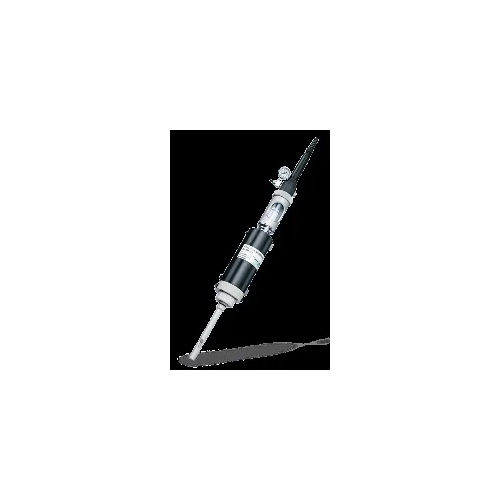
Retractable Process Adaptions (Housings)
Product Details:
- Max Height Approx. 340 mm
- Measuring Range Depends on installed sensor
- Equipment Type Retractable Process Adaption (Sensor Housing)
- Temperature -20C to +140C (depends on sealing material)
- Specimen Size Depends on sensor
- Automation Grade Manual/Pneumatic (optional)
- Interface Type Sensor dependent
- Click to View more
Retractable Process Adaptions (Housings) Product Specifications
- Depends on installed sensor
- Approx. 340 mm
- Retractable Process Adaption (Sensor Housing)
- 100 mm
- Designed for sensors up to 12 mm diameter
- Depends on sensor
- -20C to +140C (depends on sealing material)
- Manual/Pneumatic (optional)
- Sensor dependent
- 1/2 to 1
- Depends on Sensor Type
- Manual or Pneumatic
- No external power required (except for optional pneumatic type)
- 6 bar (for optional pneumatic)
- Depends on sensor selection
- 0% to 95% RH, non-condensing
- Depends on material (typically Stainless Steel 316L)
- Inline and bypass applications
- No intrinsic supply (pneumatic control with 24V DC valve option)
- Approx. 2.5 kg
- No integrated display
- Threaded or Flanged
- Sensor dependent
- 1 (per housing)
- Depends on sensor/electronics
- Chemical, Pharmaceutical, Food & Beverage, Water Treatment
- Retractable, easy cleaning, in-process calibration, sealable, leak-proof, safe maintenance, various process connections
- Provision for external or integrated cleaning nozzle
- Threaded (G 1/2", G 1") or Flanged as required
- Max. 6 bar
- ATEX/Ex-proof design available
- Up to 220 mm
- IP65 (manual), IP67 (pneumatic type)
- pH, ORP, Conductivity, Dissolved Oxygen, etc.
- Easy sensor exchange and maintenance under process conditions
- Stainless Steel 316L, Alloy, or customized materials
- EPDM, FKM (Viton), PTFE or as specified
Retractable Process Adaptions (Housings) Trade Information
- Central America, Middle East, South America, Asia, Western Europe, Eastern Europe, North America, Australia, Africa
- All India
Product Description
Retractable Process Adaptions (Housings)
- Intelligent sensor locking system - If no sensor is installed, no action is possible, preventing unwanted operation.
- Highly efficient cleaning chamber and large bore size design ensures particle/ dirt is flushed away.
- The complete retractable housing conforms with ATEX (94 / 9 / EC) directive requirements.
- Timesavings due to electrode/sensor maintenance and replacement without process downtimes.
- Versions with manual or pneumatic operation, as well as automated cleaning and calibration.
- Models for fully hygienic/sterile operations for process reliability.
- Versions with integrated sensor detector for enhanced safety.
- Process-independent maintenance, replacement and cleaning/(re-)calibration of electrodes/sensors without jeopardizing process safety, sterility/hygiene.
FAQ
1. What is a process adaptation that retracts?
Ans - A retractable process adaptation is a modification that may be applied to a procedure and is readily undone, enabling the procedure to be altered and tailored to various circumstances.
2. Why are modifications to retractable processes crucial?
Ans - Companies may swiftly and easily respond to shifting circumstances and client needs with retractable process adjustments rather than having to start from scratch. Processes can become more effective as a result, saving time and money.
3. Which processes are amenable to retractable process adaptation?
Ans - Any type of process, including those in manufacturing and customer service, can be modified using retractable process adaptations.
4. What are some examples of processes that can be retracted?
Ans - The order of steps in a process, the addition or deletion of steps, and changes to the length of each step are a few examples of retractable process adjustments.
5. How is an adaptable retractable procedure implemented?
Ans - It is possible to apply a retractable process adaptation by updating, changing, or constructing brand-new processes. Before implementing the adaptation, its crucial to take into account how it will impact the entire procedure.
Versatile Construction and Adaptability
Engineered with high-grade Stainless Steel 316L or alloys, these retractable process adaptions offer robust resistance to corrosion and mechanical stress. Customization is available to meet specialized application requirements. The flexible process connectionthreaded or flangedensures seamless integration into existing systems, while compatibility with all major seal materials accommodates various media and process conditions.
Effortless Maintenance and Safe Operation
The innovative retractable design permits fast sensor exchange and routine maintenance without halting process flow, enhancing operational safety and reducing downtime. External or integrated cleaning nozzles further simplify upkeep, making in-process calibration and sensor rinsing straightforward in demanding environments. Automation choices include both manual and pneumatic operation, delivering tailored process control.
FAQs of Retractable Process Adaptions (Housings):
Q: How does the retractable process adaption facilitate sensor maintenance?
A: The retractable design allows operators to safely exchange or service the sensor without stopping the entire process. Maintenance and calibration can be performed inline, reducing downtime and ensuring continuous measurement, thanks to reliable sealing and leak-proof construction.Q: What applications are suitable for these sensor housings?
A: These housings are ideal for chemical, pharmaceutical, food & beverage, and water treatment processes requiring real-time measurement of parameters like pH, ORP, conductivity, and dissolved oxygen. They are compatible with a range of sensors and can be used in both inline and bypass setups.Q: When should I opt for threaded versus flanged process connections?
A: Threaded connections (G 1/2", G 1") are typically preferred for smaller pipelines or when quick installation is needed. Flanged connections are better suited for larger systems or where secure, robust attachment is necessary to handle higher mechanical or thermal stresses.Q: Where can I use the equipment considering environmental conditions?
A: The housings are rated for indoor and outdoor environments with an operating temperature range of -20C to +140C (dependent on sealing material) and humidity between 0% and 95% RH (non-condensing). They also offer ingress protection up to IP67 (pneumatic models), making them suitable for harsh or wet industrial areas.Q: What are the benefits of using various seal materials?
A: Seal material selectionEPDM, FKM (Viton), PTFE, or custom optionsensures chemical compatibility with different process media and optimal performance under varying temperature and pressure conditions, thereby maximizing safety and extending equipment lifespan.Q: How is pneumatic operation achieved and what are its requirements?
A: Pneumatic operation uses compressed gas (6 bar) for automatic sensor insertion or retraction, controlled by a 24V DC valve (optional). This automation improves process control, particularly in hazardous or hard-to-reach locations, enhancing both operator safety and process reliability.
Price:
- 50
- 100
- 200
- 250
- 500
- 1000+

Other Products in 'Process Analytics' category

GST : 27AABCM0779N1Z0

- Amar Hill, Saki Vihar Road, Powai,Mumbai - 400072, Maharashtra, India
- Phone : 08045816537
- Ms Ekta Zemse (Executive Marketing)
- Mobile : 08045816537
-
 Send Inquiry
 Send Inquiry
|


 |
Mettler-Toledo India Private Limited
All Rights Reserved.(Terms of Use) Developed and Managed by Infocom Network Private Limited. |
