 English
 Spanish
 French
 German
 Italian
 Chinese (Simplified)
 Japanese
 Korean
 Arabic
 Portuguese
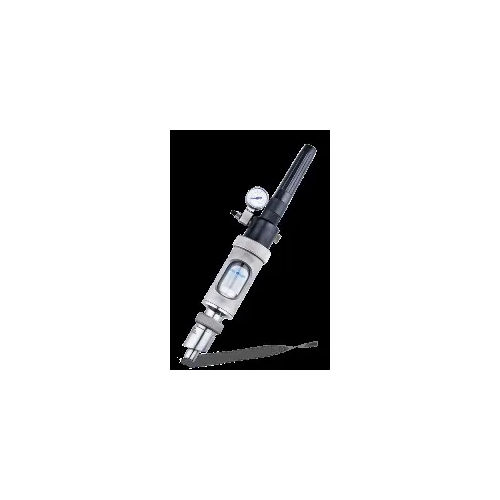
Stationary Process Adaptions (Housings)
Product Details:
- Max Height 215 mm
- Accuracy 1% of FS
- Frequency 50 Hz
- Power Supply 220V / 50Hz
- Test Range 0 1000 N
- Hardness Up to 60 HRC
- Gas Pressure Up to 10 bar
- Click to View more
Stationary Process Adaptions (Housings) Product Specifications
- Optional Modbus / RS485
- 10C 60C
- 220V AC
- Single or Multiple
- 50 mm 200 mm
- Semi-automatic / Automatic
- Up to 500 mm/min
- Up to 10 bar
- Approx. 12 kg
- 0 1000 N
- Up to 60 HRC
- 50 Hz
- 1% of FS
- 215 mm
- Manual & Automatic
- 220V / 50Hz
- <2 seconds
- For integrating sensors or instruments in stationary pipelines
- 120 mm
- 0.1 N
- Digital / Analog (as required)
- Process Housing
- Up to 100 mm length, 2 mm 20 mm thickness
- 10% 90% RH (non-condensing)
- Corrosion-resistant, Robust design, Easy integration
- Configurable per process
- Standard / Custom available
- 1/2 inch NPT
- Flange or Inline
- Industrial process adaption for stationary applications
- Metallic / Silver
- Available
- Up to 16 bar
- Stainless Steel 304 / 316L
- Electropolished (<0.8 Ra micron)
- IP65/IP66
- Available upon request
- -10°C to +80°C
- ASME, EN, ISO
- PTFE/Silicone O-Rings
- Tri-clamp / Weld / Threaded
Stationary Process Adaptions (Housings) Trade Information
- Central America, Australia, Eastern Europe, Middle East, South America, Asia, Western Europe, North America, Africa
- All India
Product Description
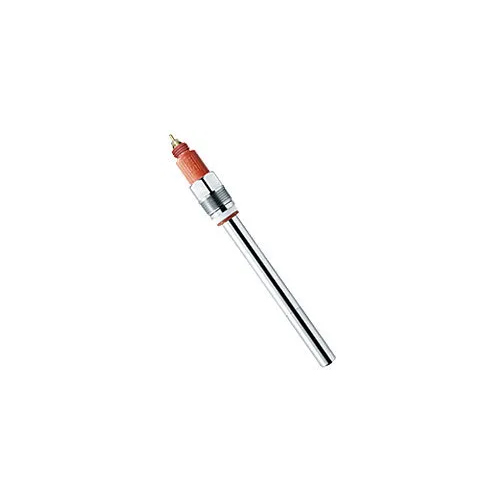
Stationary Process Adaptions (Housings)
- Standard holder for sensor/electrodes with Pg 13.5 thread.
- Models for pressurization of liquid-electrolyte electrodes.
- Wetted parts in s/s, special alloys/metal or polymer materials to suit application conditions.
- Versions for fully sterile/hygienic/sanitary CIP operations.
FAQ
1. What does "housing" for a stationary process mean?
Ans - A form of protective casing called a stationary process adaption (housing) is used to support and secure machinery or equipment that isnt meant to be moved. Along with offering physical protection, the housing is made to shield the equipment from environmental elements like moisture, dust, and dirt.
2. What kinds of machinery can be accommodated in a fixed process adaptation?
Ans - Anything that isnt meant to be moved can be housed in a stationary process adaptation. This applies to equipment, electronics, and other elements that have to stay in the same spot.
3. What components go towards making stationary process adaptations?
Ans - Standard building materials for stationary process adaptations include metal, plastic, and fibreglass. As a result, the housing can shield the equipment from the weather and offer structural support.
4. Are modifications to stationary processes programmable?
Ans - Yes, modifications to stationary processes can be made to fit a particular application or environment. Custom adaptations can be created to satisfy a range of demands, depending on the unique requirements.
5. What safety features are there in an adaptation of a stationary process?
Ans - Adaptations to stationary processes frequently include security components like locks, tamper-evident seals, and grounding clips. This guarantees that when its not in use, the equipment is safe and secure.
Advanced Materials & Sealing
Our process housings utilize premium-grade stainless steel (304/316L) and feature PTFE or silicone O-rings for reliable sealing. The electropolished surface ensures hygiene, corrosion resistance, and long-lasting performance in demanding environments, making them ideal for pharmaceutical, food, and chemical industries.
Flexible Configuration & Integration
Designed with versatility in mind, these housings offer multiple connection typestri-clamp, weld, and threadedalongside flange or inline mounting options. Optional digital/analog displays and customizable measuring ranges allow for smooth sensor or instrument integration tailored to your specific process requirements.
Superior Performance & Compliance
With pressure ratings up to 16 bar, service temperatures between -10C and +80C, and standards compliance (ASME, EN, ISO), these housings assure safety and precision. IP65/IP66 ingress protection and a robust design guarantee consistent operational performance in a variety of industrial settings.
FAQs of Stationary Process Adaptions (Housings):
Q: How do I select the right process housing and material for my application?
A: Choose between stainless steel 304 or 316L based on your process media and corrosion resistance needs. Consider pressure and temperature requirements, required ingress protection (IP65/IP66), and compatible connection ends (tri-clamp, weld, threaded) to ensure optimal integration.Q: What is the process for customizing housings for OEM applications?
A: Simply provide your required specifications, including material, connection type, and any options for digital/analog display or additional inspection ports. Our engineering team will consult with you to ensure standards compliance and deliver housings tailored precisely to your process needs.Q: Where can these process housings be installed?
A: These housings are suitable for stationary pipeline installations in industrial plants, including pharmaceutical, food processing, chemical manufacturing, and other environments requiring robust sensor or instrument integration.Q: What are the main benefits of using electropolished stainless steel housings with PTFE/Silicone seals?
A: Electropolished housings offer superior surface finish (<0.8 Ra micron), minimizing contamination risk and simplifying cleaning. PTFE or silicone O-rings provide excellent chemical compatibility and secure sealing under pressure and temperature variances.Q: How is the equipment controlled and monitored during operation?
A: The housings support both manual and automatic control modes. Measurement data can be monitored via optional digital or analog displays, with configurable Modbus or RS485 interfaces for easy integration into plant automation systems.Q: What is the typical usage and benefit of these process housings in industrial settings?
A: They allow reliable mounting and protection of measurement devices, ensuring accurate, consistent process monitoring and data collection. The robust and corrosion-resistant design enhances equipment longevity and minimizes maintenance needs, contributing to efficient operations.
Price:
- 50
- 100
- 200
- 250
- 500
- 1000+

Other Products in 'Process Analytics' category

GST : 27AABCM0779N1Z0

- Amar Hill, Saki Vihar Road, Powai,Mumbai - 400072, Maharashtra, India
- Phone : 08045816537
- Ms Ekta Zemse (Executive Marketing)
- Mobile : 08045816537
-
 Send Inquiry
 Send Inquiry
|


 |
Mettler-Toledo India Private Limited
All Rights Reserved.(Terms of Use) Developed and Managed by Infocom Network Private Limited. |
