 English
 Spanish
 French
 German
 Italian
 Chinese (Simplified)
 Japanese
 Korean
 Arabic
 Portuguese
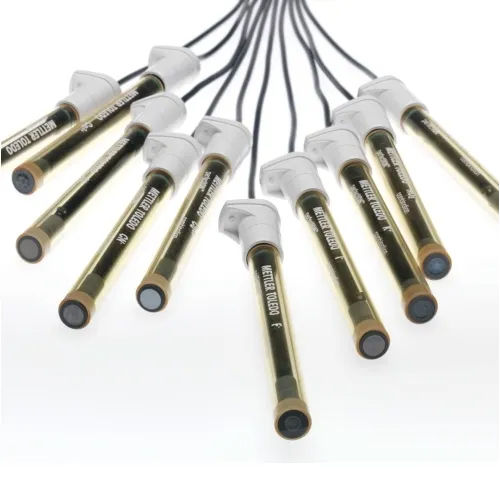
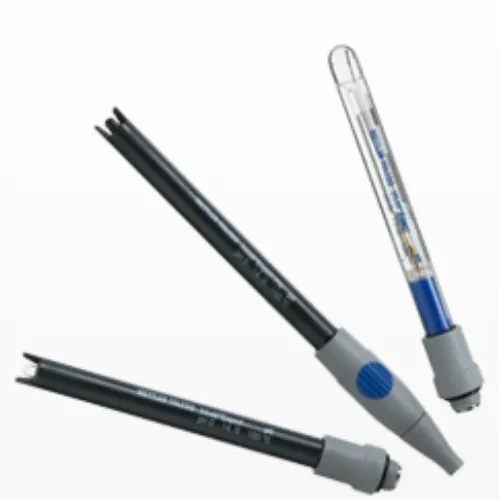
Ion selective sensors (ISE)
Product Details:
- Features Robust design, High precision, Quick response, Easy calibration
- Usage Laboratory, Industrial, Water quality analysis
- Application Environmental monitoring, Agricultural analysis, Clinical chemistry
- Automatic Grade Semi Automatic
- Function Measurement of selective ion concentration in solutions
- Size Standard Probe length 120 mm, Diameter 12 mm
- Battery Life Up to 300 hrs
- Click to View more
Ion selective sensors (ISE) Product Specifications
- Semi Automatic
- DC 3V/6V
- Measurement of selective ion concentration in solutions
- Environmental monitoring, Agricultural analysis, Clinical chemistry
- 0.01 mg/L
- Laboratory, Industrial, Water quality analysis
- White/Blue
- Digital LCD
- Robust design, High precision, Quick response, Easy calibration
- Wired
- Battery
- 0 1000 ppm (ion concentration)
- IP54
- Ion selective sensors (ISE)
- Solid State, Durable Plastic and Glass
- BNC
- Standard Probe length 120 mm, Diameter 12 mm
- LCD
- Up to 300 hrs
- 0C to 60C
- 12-18 months (typical)
- Dry when not in use
- Replaceable
- Potentiometric
- 1 meter (customizable)
- pH, ISE, Multi-parameter
- Single or Multi-point
- BNC male
- 85% RH
- < 10 seconds
Ion selective sensors (ISE) Trade Information
- Australia, North America, Eastern Europe, Western Europe, Africa, Central America, Middle East, South America, Asia
- All India
Product Description
Ion selective sensors (ISE)
With the increased capability of modern titrators it is possible to automate the measurement of ion content in a matter of minutes using an ion-selective electrode (ISE). This can be achieved either by direct measurement or by incremental techniques such as standard addition or subtraction.
FAQ
1. Ion Selective Sensors (ISE): What Are They?
Ans - An instrument called an Ion Selective Sensor (ISE) measures the quantity of a particular ion in a solution. It operates by identifying the voltage differential between a reference electrode and the solution.
2. How does an ISE operate?
Ans - In an ISE, there are two electrodes: an ion-selective membrane on one and a reference electrode on the other. A substance sensitive to a certain ion in the solution is used to create the ion-selective membrane. The voltage difference between the two electrodes is then measured using the reference electrode. The voltage difference changes when the ion concentration in the solution does, and this can be used to measure the ion concentration.
3. What benefits come with using an ISE?
Ans - ISEs are incredibly adaptable and can be used to measure a variety of ions. They can measure concentrations down to a very small level and are also extremely accurate. They can be utilised in a number of settings and require very little care.
4. What drawbacks come with employing an ISE?
Ans - The cost of ISEs is relatively high, and maintaining and operating them requires some technical expertise. Additionally, they need routine calibration and may be impacted by other ions in the solution.
5. What kinds of ions can an ISE measure?
Ans - Numerous ions, including sodium, potassium, calcium, chloride, sulphate, and nitrate, can be measured using ISEs.
Rapid and Reliable Ion Measurement
These ion selective sensors deliver quick, precise readings in less than 10 seconds, covering up to 1000 ppm ion concentrations. Their potentiometric measurement principle ensures high accuracy (0.01 mg/L), making them ideal for demanding environments like laboratories, industrial water analysis, and environmental research.
Engineered for Versatility and Ease
Featuring a replaceable solid-state electrode, standard BNC connectivity, and compatibility with a variety of digital meters, these sensors are straightforward to integrate and maintain. The user-friendly interface, semi-automatic calibration (single or multi-point), and customizable cable lengths provide flexibility for diverse applications.
Superior Durability and Longevity
Constructed from robust plastic and glass with an IP54 protection rating, these sensors are built to withstand rigorous usage. With a typical operational lifespan of 12-18 months and a battery life of up to 300 hours, they offer dependable performance while minimizing maintenance requirements.
FAQs of Ion selective sensors (ISE):
Q: How do you calibrate the ion selective sensor for accurate measurements?
A: The sensor allows both single or multi-point calibration. Use standard ion solutions and follow the provided calibration protocol on your compatible meter for optimal accuracy. Regular calibration is recommended, especially before critical analyses.Q: What is the recommended process for storing the sensor when not in use?
A: To maintain sensor performance and longevity, store the ISE dry when not in use, as specified. Avoid leaving it in solution or exposing it to high humidity during storage periods.Q: Where can these ion selective sensors be applied most effectively?
A: These sensors are well-suited for laboratory experiments, industrial water quality assessments, environmental monitoring, agricultural solution analysis, and clinical chemistry applications across various sectors in India.Q: What are the benefits of the replaceable electrode feature?
A: The replaceable electrode design extends the overall usability of the sensor, allowing for easy maintenance and reduced operational costs without the need to replace the entire sensor unit.Q: How versatile is the sensors compatibility with different meters?
A: These sensors are compatible with pH, ISE, and multi-parameter meters equipped with a BNC interface, making integration into existing systems straightforward and flexible.Q: When should the sensor be replaced to ensure reliable performance?
A: Typically, it is recommended to replace the sensor every 12-18 months, depending on usage frequency and sample conditions. Regular calibration and proper storage can help maximize its usable life.Q: What are the main benefits of using this sensor for water quality analysis?
A: The sensor offers rapid response, high precision, ease of calibration, and durable design, ensuring dependable and convenient ion concentration measurements for water quality assessments.
Price:
- 50
- 100
- 200
- 250
- 500
- 1000+

Other Products in 'Laboratory Consumables & Accessories' category

GST : 27AABCM0779N1Z0

- Amar Hill, Saki Vihar Road, Powai,Mumbai - 400072, Maharashtra, India
- Phone : 08045816537
- Ms Ekta Zemse (Executive Marketing)
- Mobile : 08045816537
-
 Send Inquiry
 Send Inquiry
|


 |
Mettler-Toledo India Private Limited
All Rights Reserved.(Terms of Use) Developed and Managed by Infocom Network Private Limited. |
