
Product Description
Redox/orp Buffers
Maximum Traceability and Compliance
All METTLER TOLEDOs RedoX/ORP buffers are traceable to certified international standard SRM NIST. To guarantee maximum traceability, an individual test certificate exists for every buffer solution. Simply download the quality certificate from our online database:
All the Information you Need for Safe Results
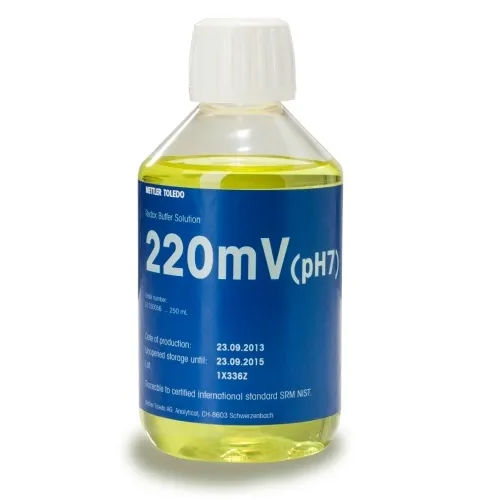
A slight change in temperature usually has a big impact on the value of the buffer. A temperature dependence table on every bottle label indicates the mV values at the most common measurement temperatures. Further there are the Lot- number, the date of production and the date of expiry printed on every bottle.
Compliance with International Regulations like GHS
Compliance with regulations is key for METTLER TOLEDO. All SDS and labels fulfill the requirements of GHS (Globally Harmonized System) and are available in local languages. Simply download any required document from our online database:
Outstanding Traceability and StabilityThese Redox/ORP Buffers are NIST/ISO 17025 certified, ensuring every batch can be reliably traced for quality assurance. With exceptional resistance to atmospheric CO2, the buffers maintain pH stability and accuracy throughout their 12-month shelf life, offering consistent results for calibration tasks.
User-Friendly and Safe PackagingPackaged in leak-proof HDPE bottles, the buffer solutions are easy to handle and minimize contamination risks. The colour-coded bottles and clear labels make identification effortless in busy laboratory or industrial settings, while the robust plastic resists chemical degradation.
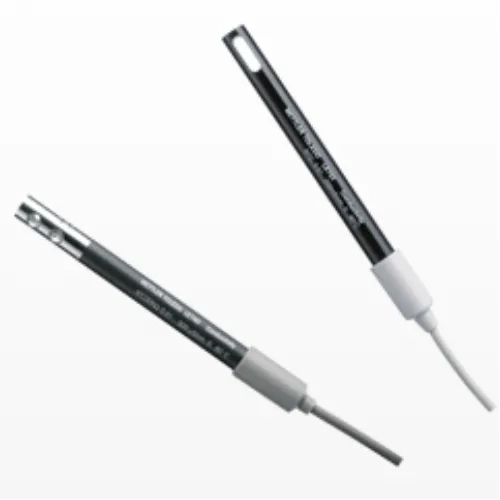
Versatile Calibration for Various ApplicationsDesigned for manual calibration processes, these buffer solutions serve a wide array of usersfrom researchers and laboratory technicians to industrial operators. Suitable for calibration of ORP/Redox meters and electrodes, their applicability extends across laboratories, manufacturing, and service environments.
FAQs of Redox/Orp Buffers:
Q: How should I use Redox/ORP Buffer Solutions for calibrating my ORP meter?
A: To calibrate your ORP meter, pour the appropriate buffer solution (220 mV, 470 mV, or 650 mV) into a clean container, immerse the electrode, and allow readings to stabilize. Adjust your meter as per the mV value marked on the bottle label. Rinse your electrode with distilled water before and after calibration for accurate results.
Q: What benefits do the colour-coded bottles provide?
A: The colour-coded bottles enhance safety and efficiency by enabling quick and easy identification of different buffer values (220 mV, 470 mV, 650 mV). This minimizes the risk of errors during calibration and streamlines workflow, especially in fast-paced laboratory environments.
Q: When do these buffer solutions expire, and how can I check their validity?
A: Each bottle has a clearly marked expiry date, which is 12 months from the date of manufacture. Always check the expiry date on the label before use to ensure buffer accuracy and compliance with laboratory standards.
Q: Where should I store Redox/ORP Buffer Solutions for optimum shelf life?
A: Store the buffer solutions at room temperature (20C to 25C), away from direct sunlight and heat sources. Keeping the bottles tightly closed when not in use helps preserve the solutions stability and accuracy.
Q: What certifications do these buffer solutions comply with?
A: These buffers are manufactured with NIST/ISO 17025 certification, providing assurance of traceability, quality, and international standard compliance for laboratory, research, and industrial applications.
Q: How are the buffer solutions resistant to atmospheric CO2?
A: The chemical formulation is specifically designed to resist changes caused by atmospheric CO2, ensuring that the mV value remains consistent and stable even if the bottle is opened repeatedly during its usage period.